September 28, 2026 - Suzy Buttress, Guest Birder
Truly delighted to welcome Suzy Buttress, host of The Casual Birder podcast. She and I met briefly at a conference where a session I could have signed up for was a bird walk led by her. Alas, it would be four more years before I listed my first bird. A real missed opportunity! I loved reading this backyard bird report, and I think you'll be charmed by how different the usual visitors are in their European form.
I live in Hampshire in the south of the UK. I call myself a casual birder; I am not an expert, but birds are extremely important to me, and they form a big part of each day. I love hearing them and watching them as they go about their daily lives. Even when I am not actively birding, I am aware of the birds singing or calling in my garden, and I will usually stop what I'm doing to look outside and see what they are up to (which doesn't help my productivity, but does help my mental health).
I regularly go birding at nature reserves, and all of our vacations and mini-breaks are planned with birding in mind.
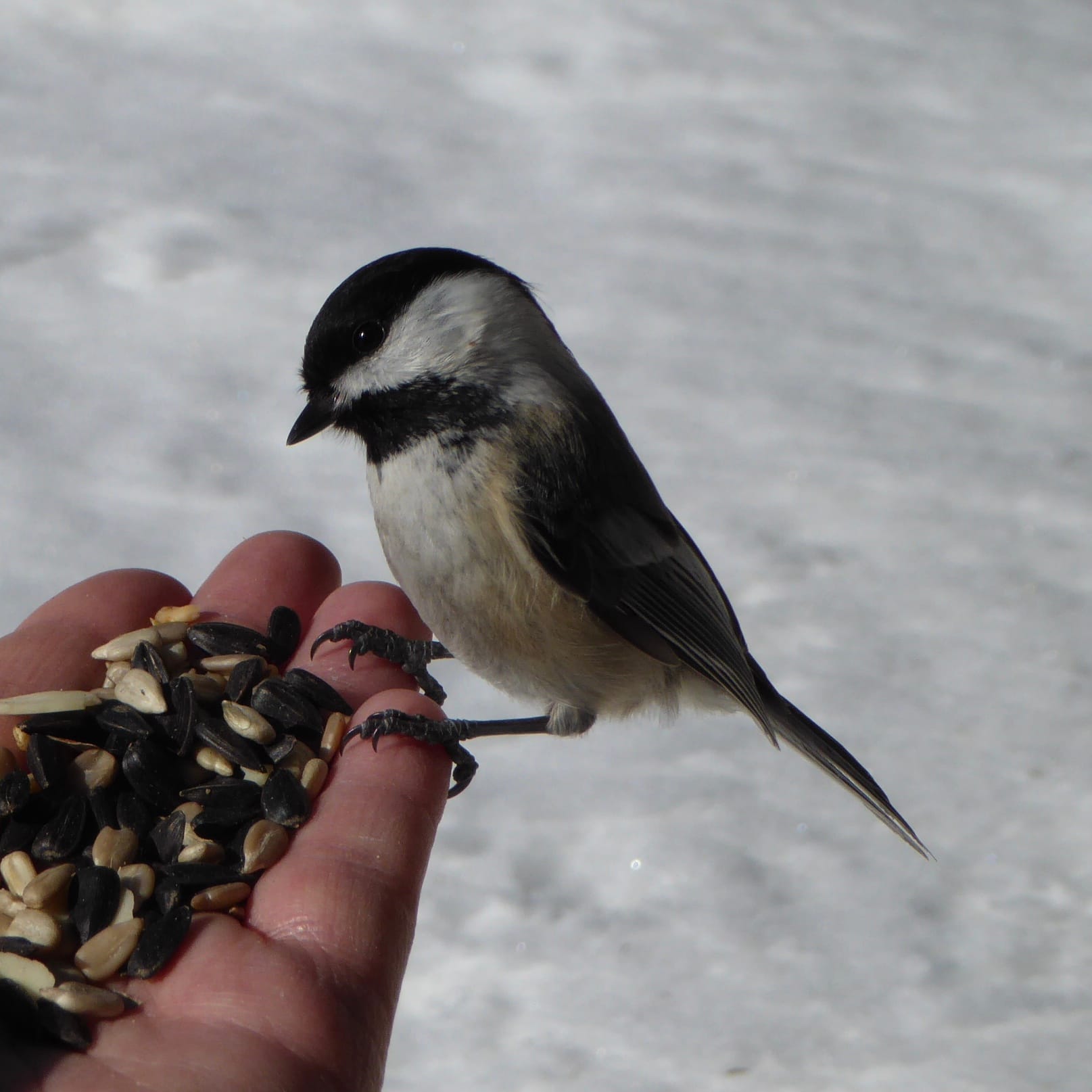
One of my biggest guilty pleasures is hand-feeding wild birds (where it is permitted). Having them use me as a bird table is such a thrill, and feeds my inner Snow White fantasy. I once spent a wonderful day near Mont Tremblant in Quebec feeding Black-capped Chickadees.
We live on a modest housing estate, surrounded by other houses, and we have a small garden, but I make it as attractive as possible for my neighbourhood birds with bird baths, feeders, and shrubs for them to hide in. Following recent advice from the UK's major birding organisations to help stop the spread of disease, I now only provide seed during the winter and spring and put out suet treats year-round.
All birds are welcomed, from the larger corvids (Rooks, Jackdaws and Magpies) to the smallest of our UK species (Goldcrests and Wrens). Most days I see Woodpigeons, Magpies, Blue Tits and a European Robin.
Let me introduce you to some of my regular garden visitors.
European Robin
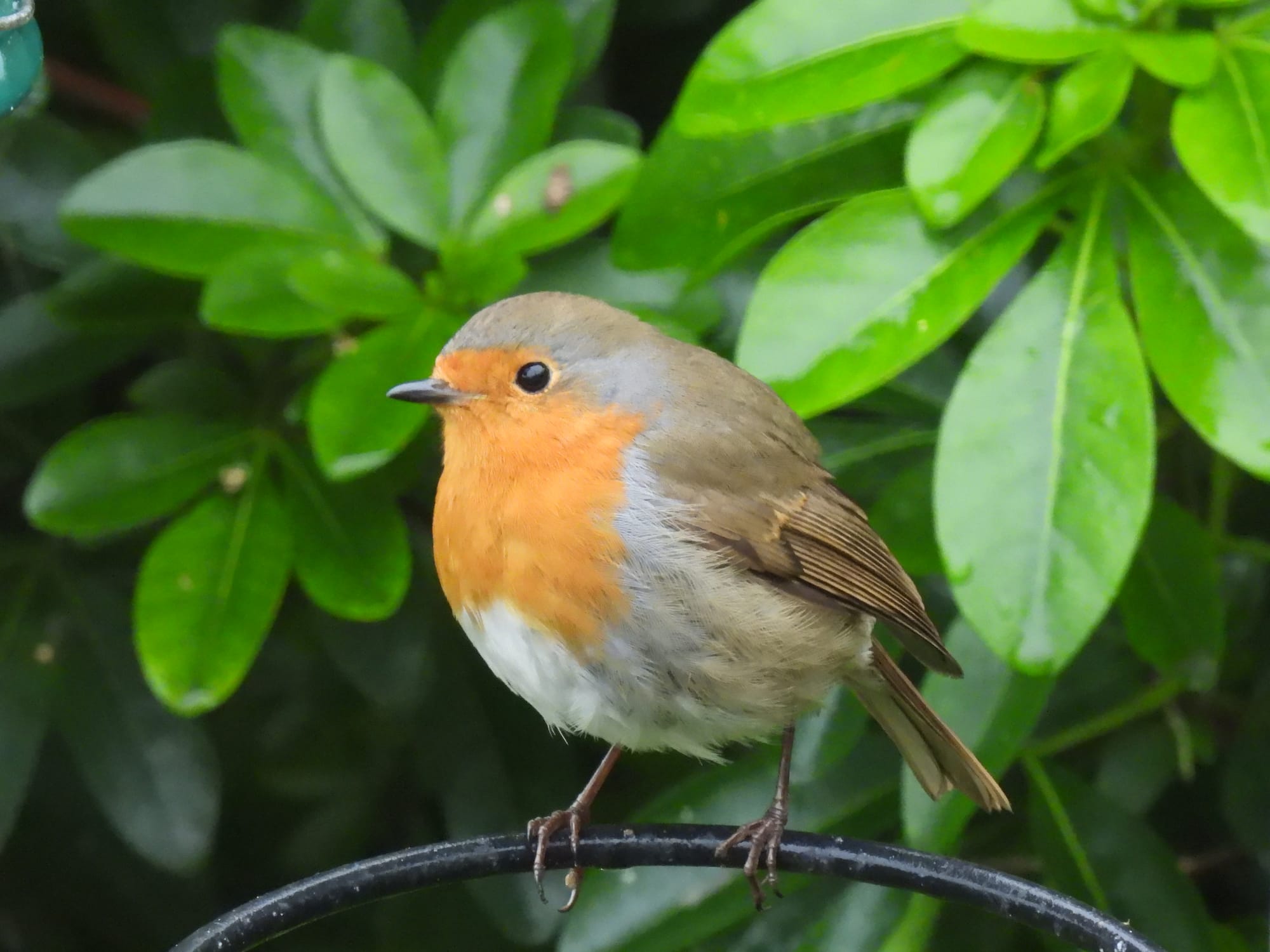
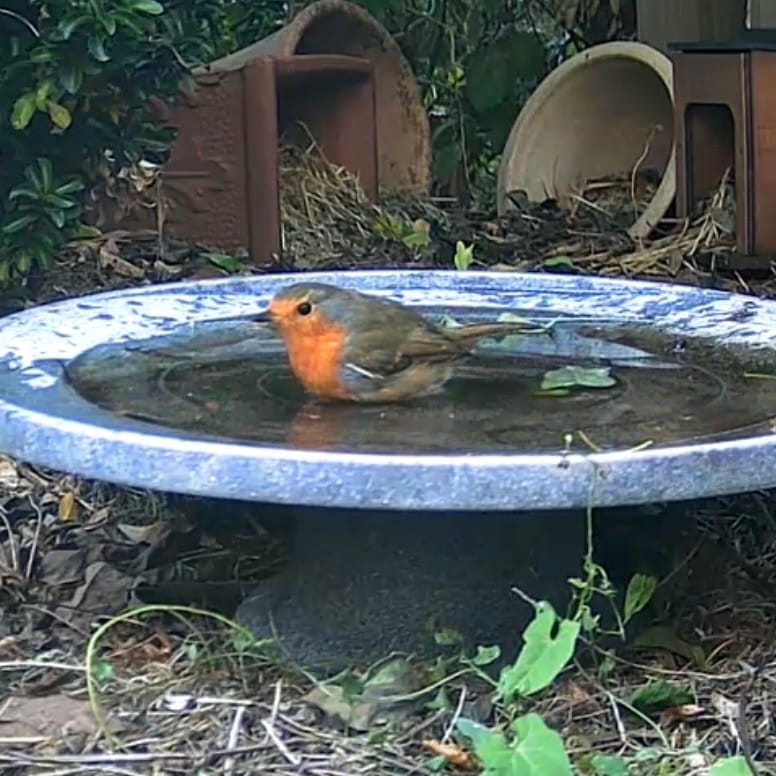
One of Britain’s most familiar and much-loved garden birds, often depicted on festive greetings cards. They are known for following gardeners, looking for an easy meal of earthworms in recently turned earth. They have a beautiful song, which sounds quite melancholic during winter months but becomes a staple of the morning chorus during breeding season.
They are very territorial and will chase off other small bird species such as Blue Tits or Goldfinches, as well as other Robins.
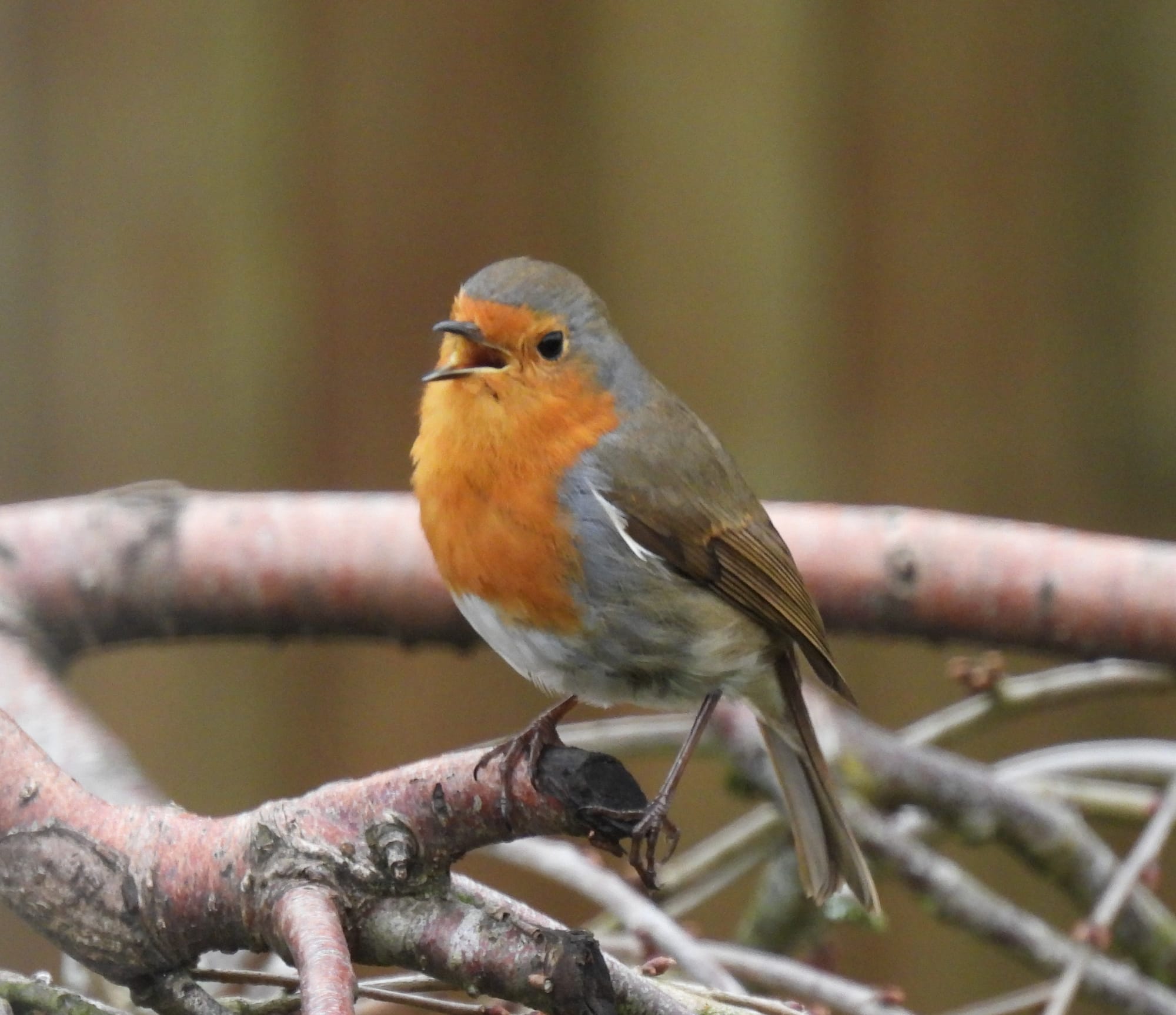
This afternoon, when in my garden putting out food in our feeding station for our nightly Hedgehog visitors, I heard a Robin singing its subsong - a flutey mix of notes much quieter than its usual song. I realised it was perched on the trellis screening our greenhouse, watching me. I stood for a moment in the afternoon sunshine, enjoying the song and observing the bird, watching as its throat warbled the notes while its bill hardly opened. So different from when they sing their loud song with the bill fully opened.
European Goldfinch
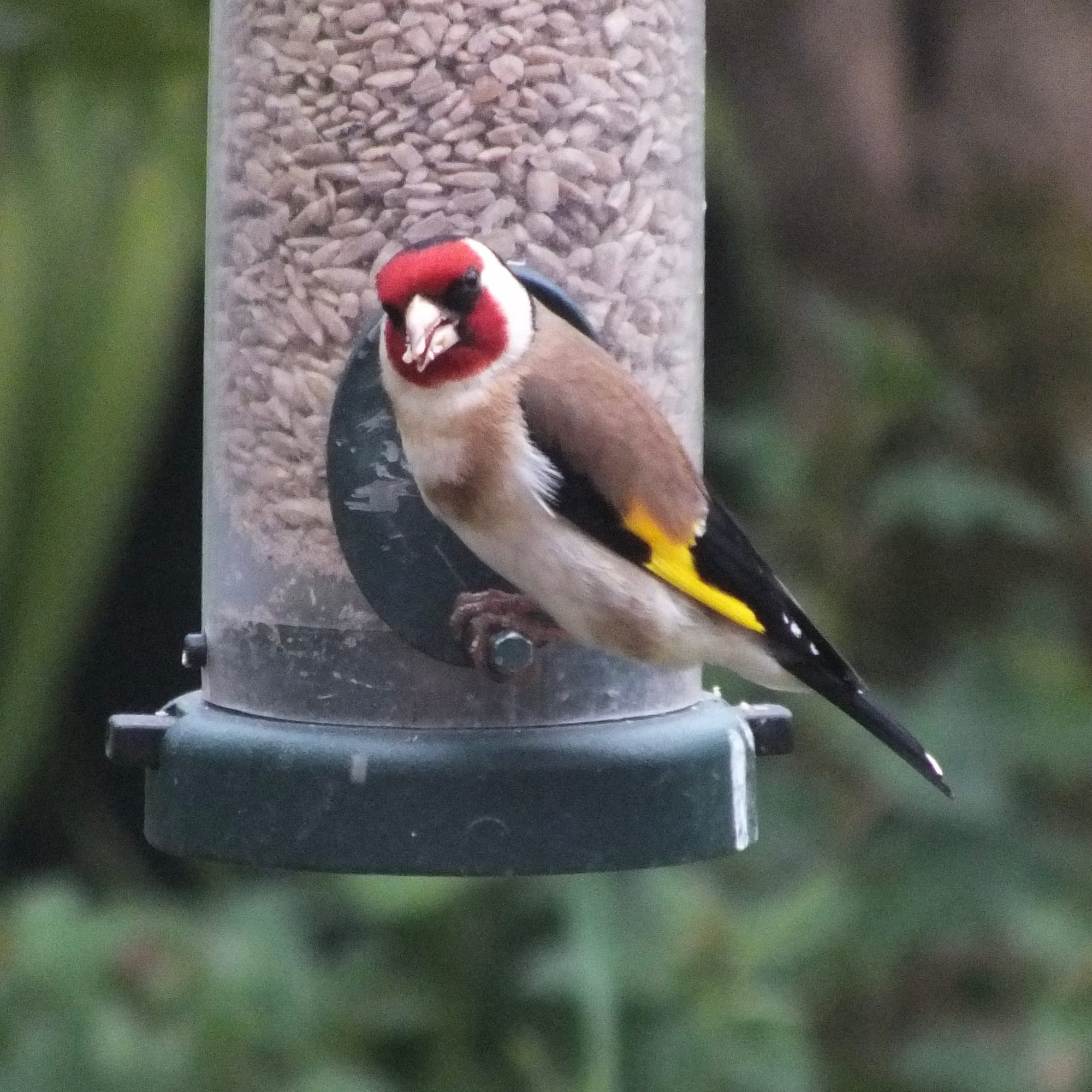
A beautiful, colourful little bird, instantly recognisable by its bright red face, golden-yellow wing patches and black-and-white tail. Goldfinches have a particular fondness for seeds, especially those from thistles, but have grown to love shelled sunflower seeds found in garden feeders. I often see one or two in my garden, and in summer there is usually one singing for long periods from our roof. They are sweet little birds, but quite feisty, and will argue loudly with each other when there is not enough space at a feeder!
Eurasian Blue Tit
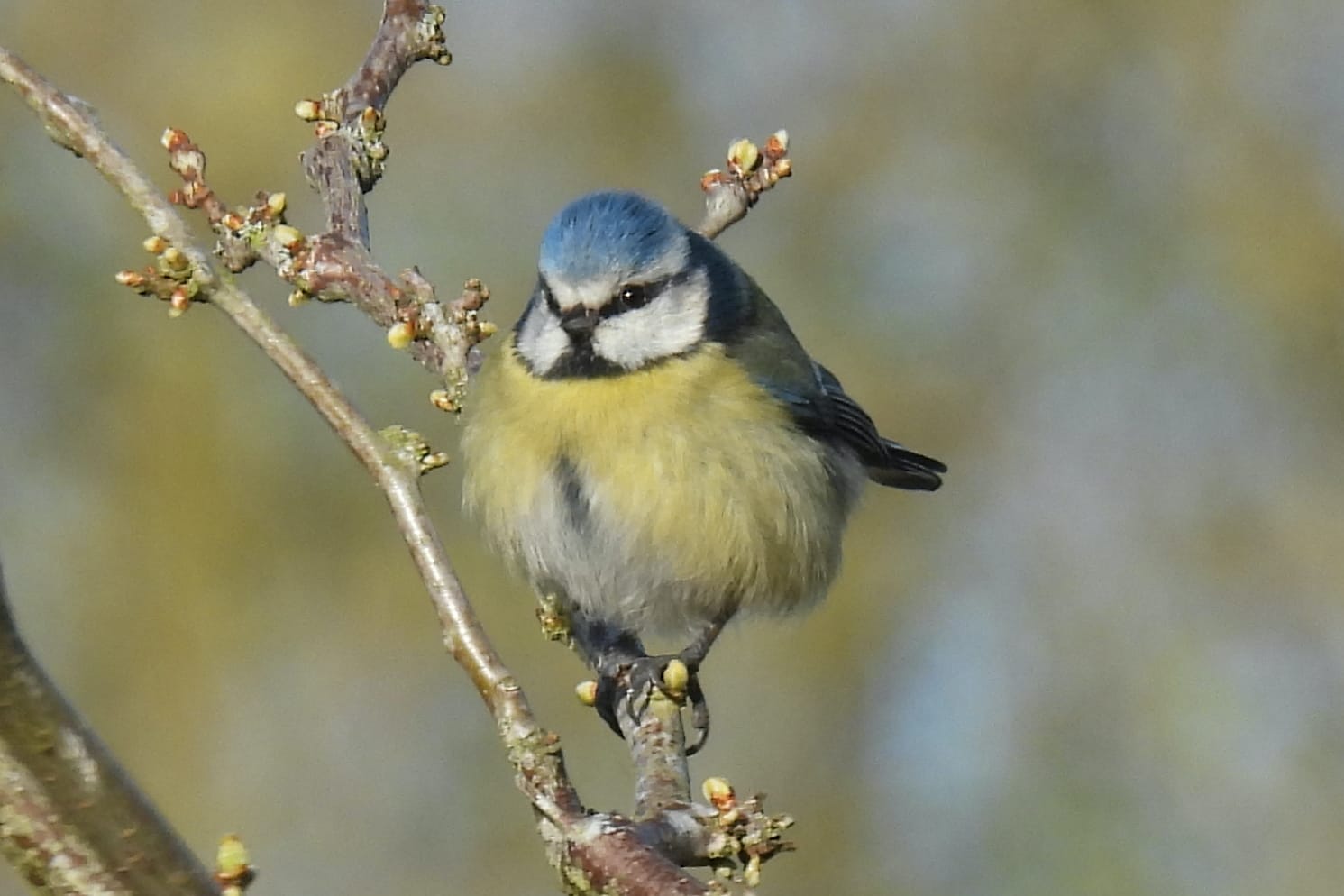
Another garden favourite, the Eurasian Blue Tit is often found at garden feeders. They are very agile and will hang upside down from twigs and feeders to reach food. They are one of the first birds to shout a warning if predators are around, and I have noticed that other birds react to their calls.
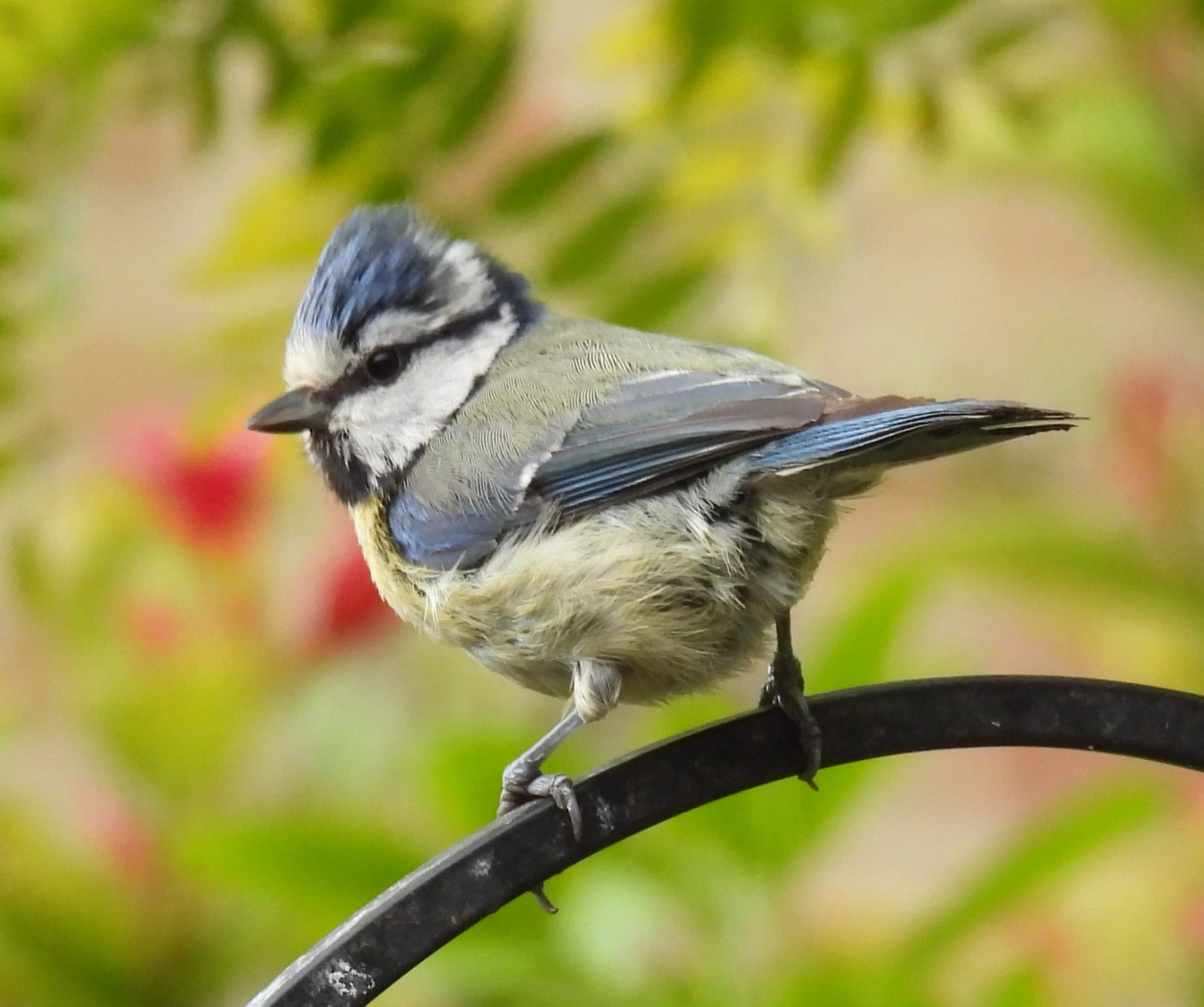
They also take readily to garden nest boxes. I have two nest boxes fitted with cameras, and it is an absolute joy to watch them building their nests and seeing the youngsters fledge. They may lay up to 10 eggs; if we are lucky, three or four youngsters survive. Watching the whole process really makes you aware of how hard it is to bring food for so many hungry mouths. During the breeding season, I provide live mealworms to help supplement their natural diet.
Long-tailed Tit
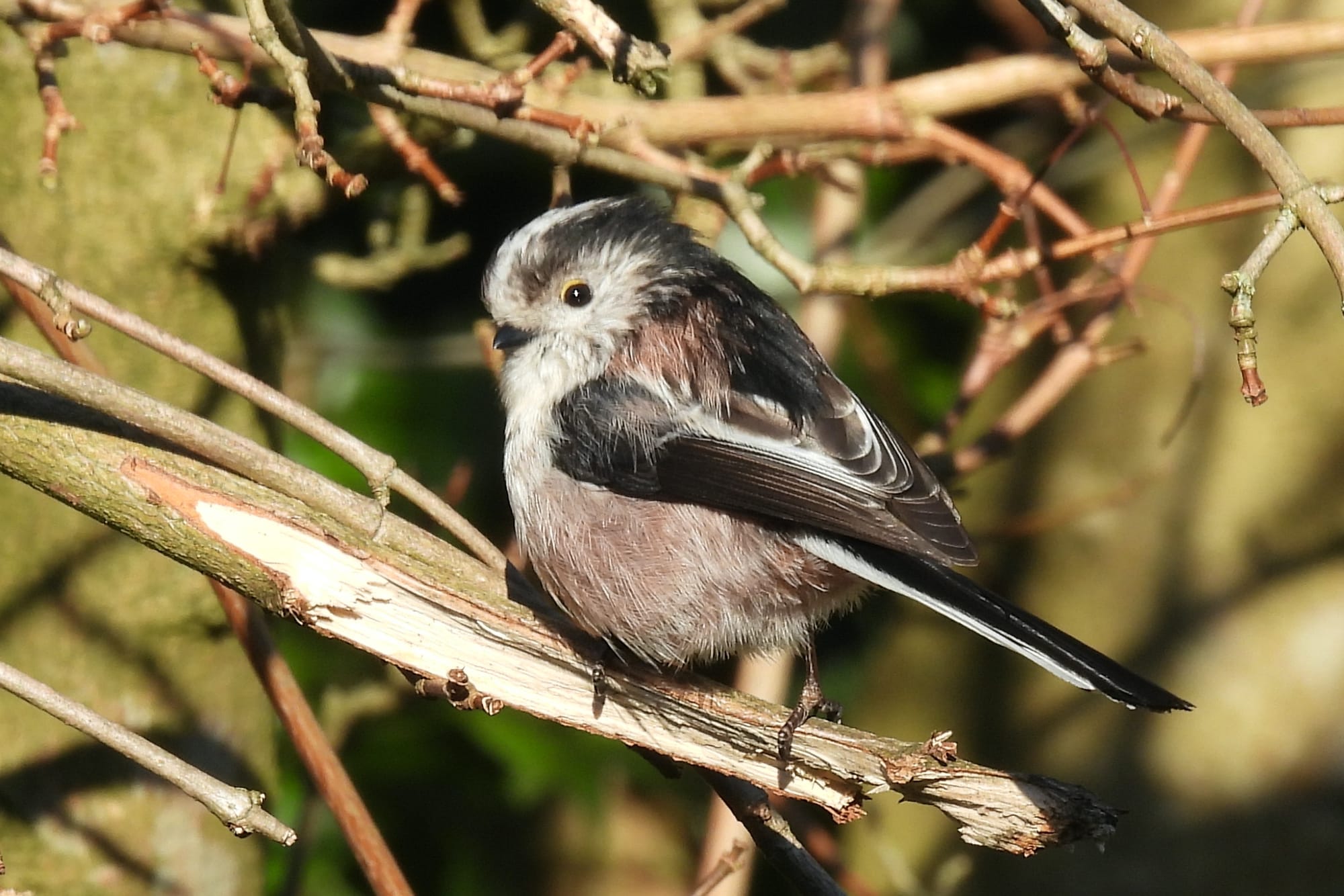
This tiny bird with a long tail reminds me of a flying lollipop! Long-tailed Tits are busy little birds, always flitting through foliage looking for insects. They live in small sociable groups, and their various contact calls, although high-pitched, are a great way to spot them.
In the last few weeks a small mixed flock of Long-tailed Tits, Blue Tits, Great Tits and a Chiffchaff has visited my garden at various times. The calls of the Long-tailed Tits alert me to their presence. They all come at once to feed or visit the water bath, and before you know it they have all flown off. I've noticed that the Robin isn't terribly thrilled when they all turn up, and will try to chase them off!
Rook
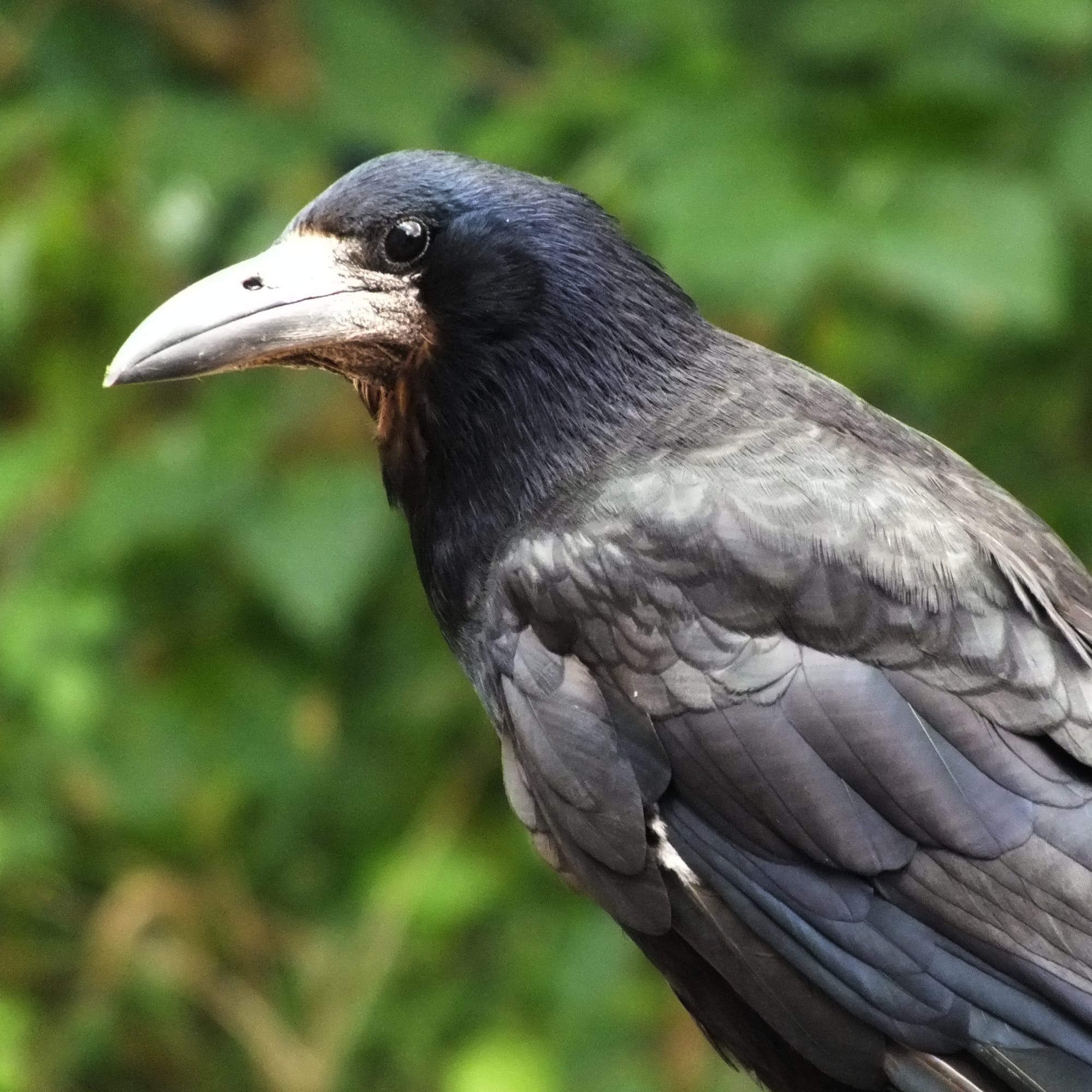
An unusual bird for my suburban garden, as Rooks are usually found in large flocks in farm fields foraging for grubs and seeds. It is a member of the Crow (Corvid) family and is recognisable by the pale bare skin around the base of its large bill. They live in big colonies in tall trees, and their calls can be deafening if you live nearby. My garden Rooks live over a mile away in a small wood.
While they all look alike, over the past eight years, I have learned to recognise a couple of individuals, one of which has an overgrown bill, and the other which used to sit outside my kitchen window waiting for suet treats. I haven't seen that one for a while, but I treasure the memories of having it appear and demand treats!
Eurasian Jackdaw
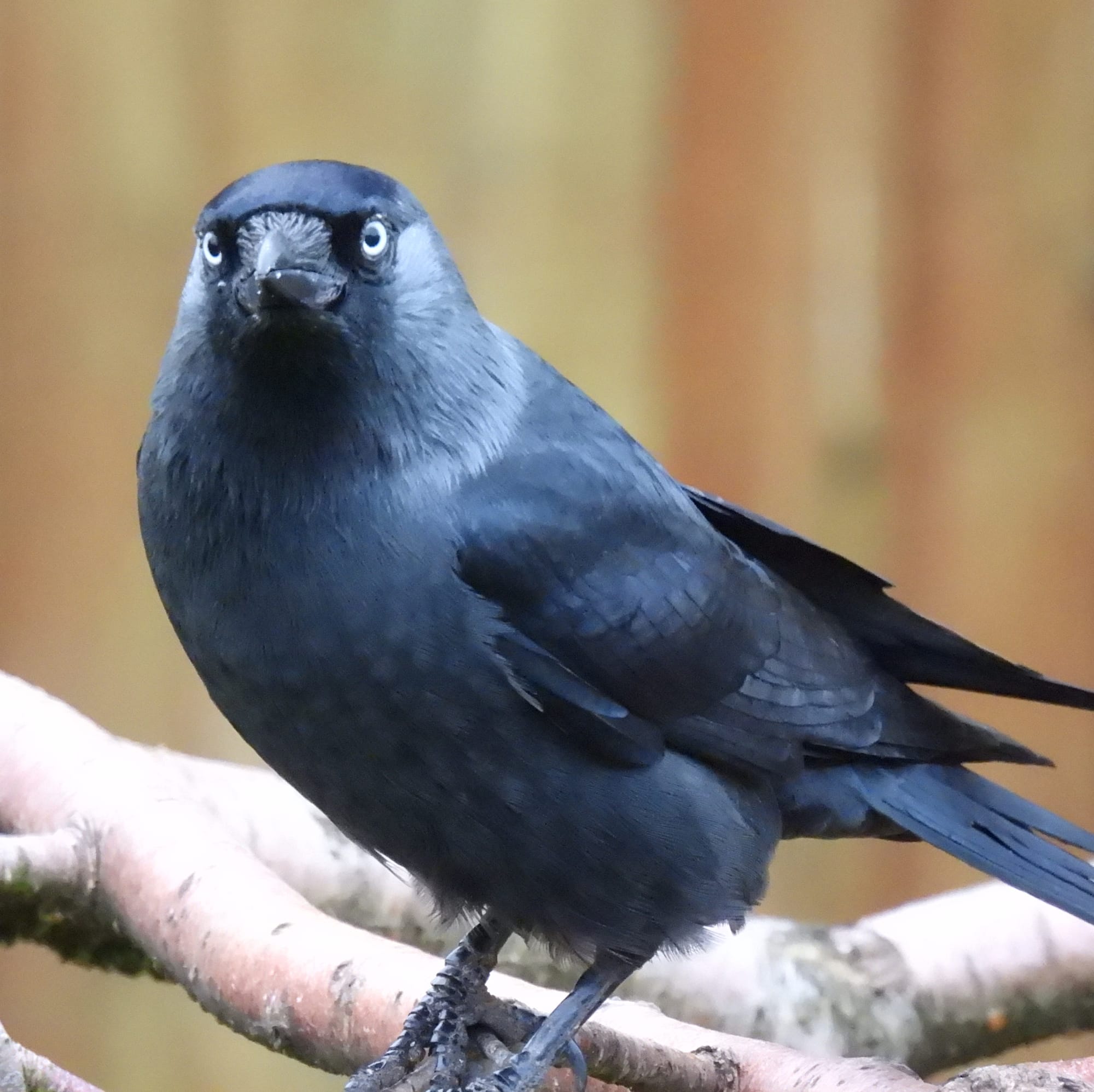
The Eurasian Jackdaw is a sociable member of the crow family, often associating with Rooks. Smaller than Rooks and Crows, they are easily recognised by their glossy black plumage, silvery-grey nape and striking pale eyes. They have a great call, which always sounds to me like they are disappointed with something.
I love seeing them strut about the garden searching for food.
During the winter months, large flocks of Jackdaws and Rooks fly over in the morning and evening, on their way to and from their roosts. Hearing the distant calls of the two species getting louder and louder will make me run to the window to watch them fly over on their 'commute'.
Common Magpie
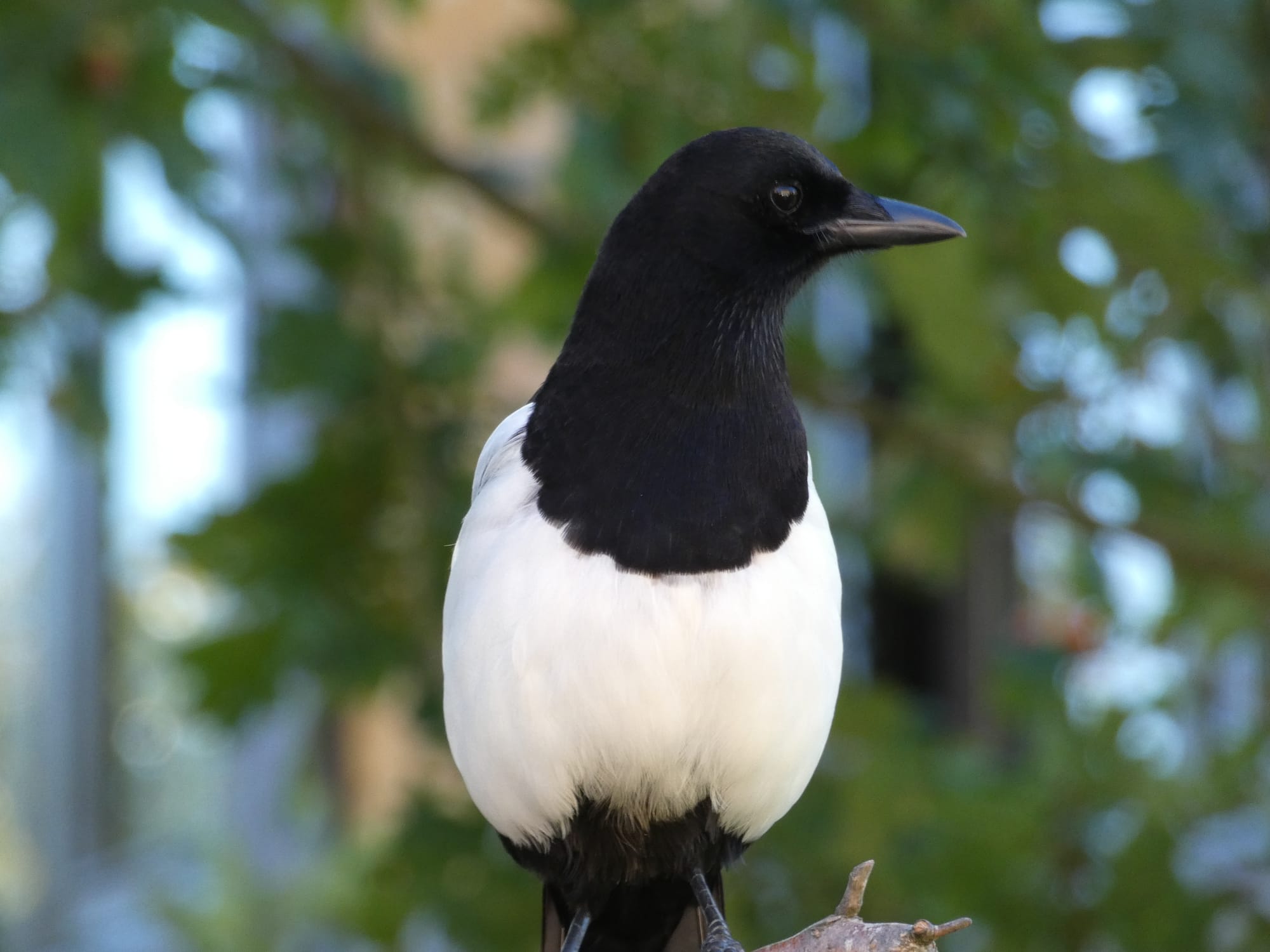
Magpies are one of my favourite garden birds. Another member of the Crow family, it is very intelligent and a ruthless scavenger, sometimes taking songbird eggs and fledglings.
They have a very confident demeanour, flying into the garden as though they own it, and strutting around searching for food.
They are problem solvers, and I love watching them figure out new feeders. Like their cousin, the Raven, they will try to move another species away from a food source by creeping up behind and pulling on tail feathers!
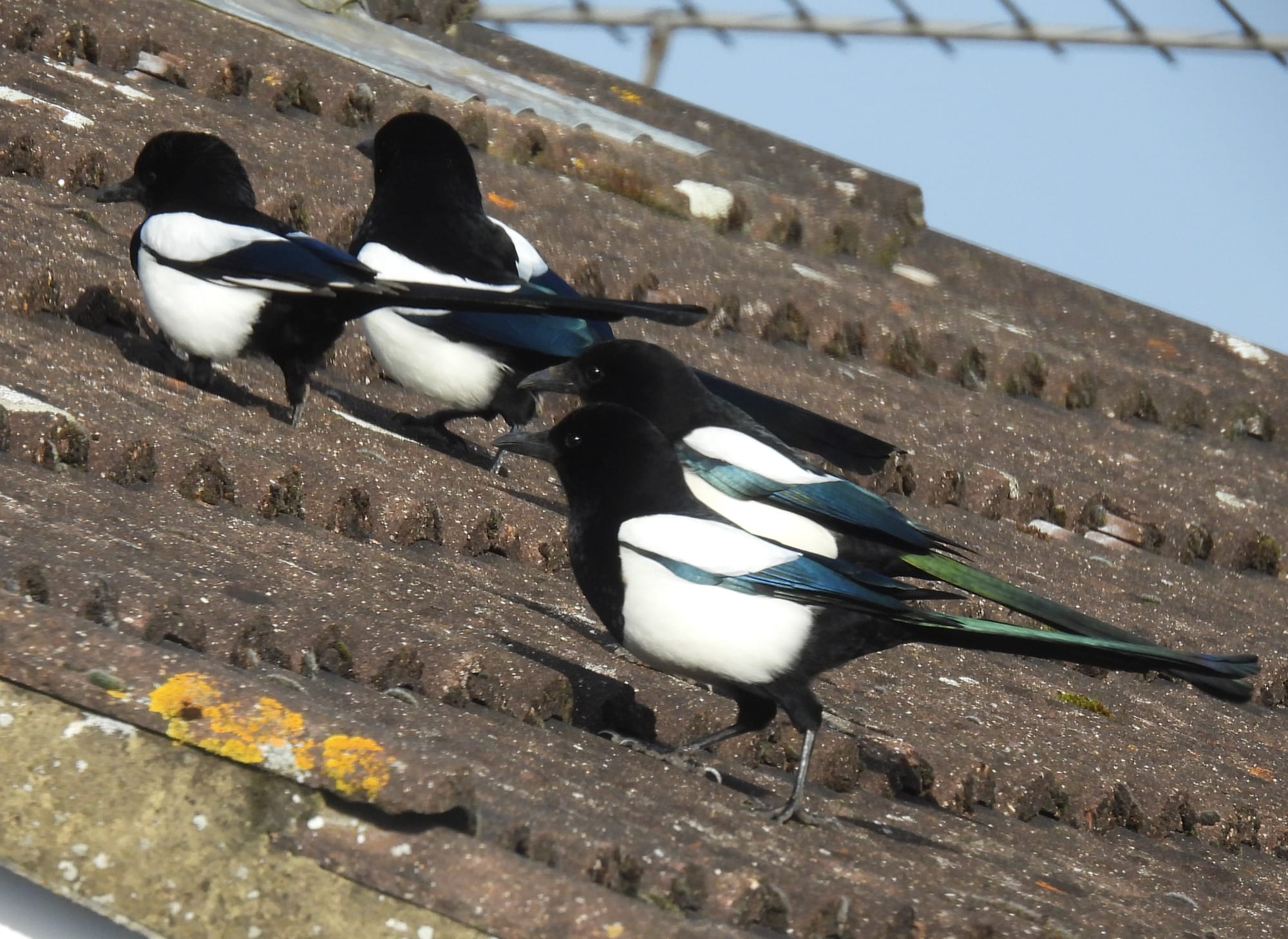
After the breeding season, young Magpies travel around in family groups. The 'teenagers' always seem to cause mayhem. I've watched them following a squirrel around the garden to see where it buried nuts and seen them deliberately pull apart the lining of my flower troughs. One summer, I kept finding small items of my washing on the ground under my line. I couldn't figure out why my pegs were failing, until I discovered 3 juvenile Magpies pulling the pegs off my washing and watching as the clothes fell to the ground!
They have an extensive vocabulary, and I love hearing one chattering quietly to itself as it runs through its repertoire. They can be extremely loud when predators are around, and I always know when there is a cat in the garden from the alarm calls of the Magpie!
Common Woodpigeon
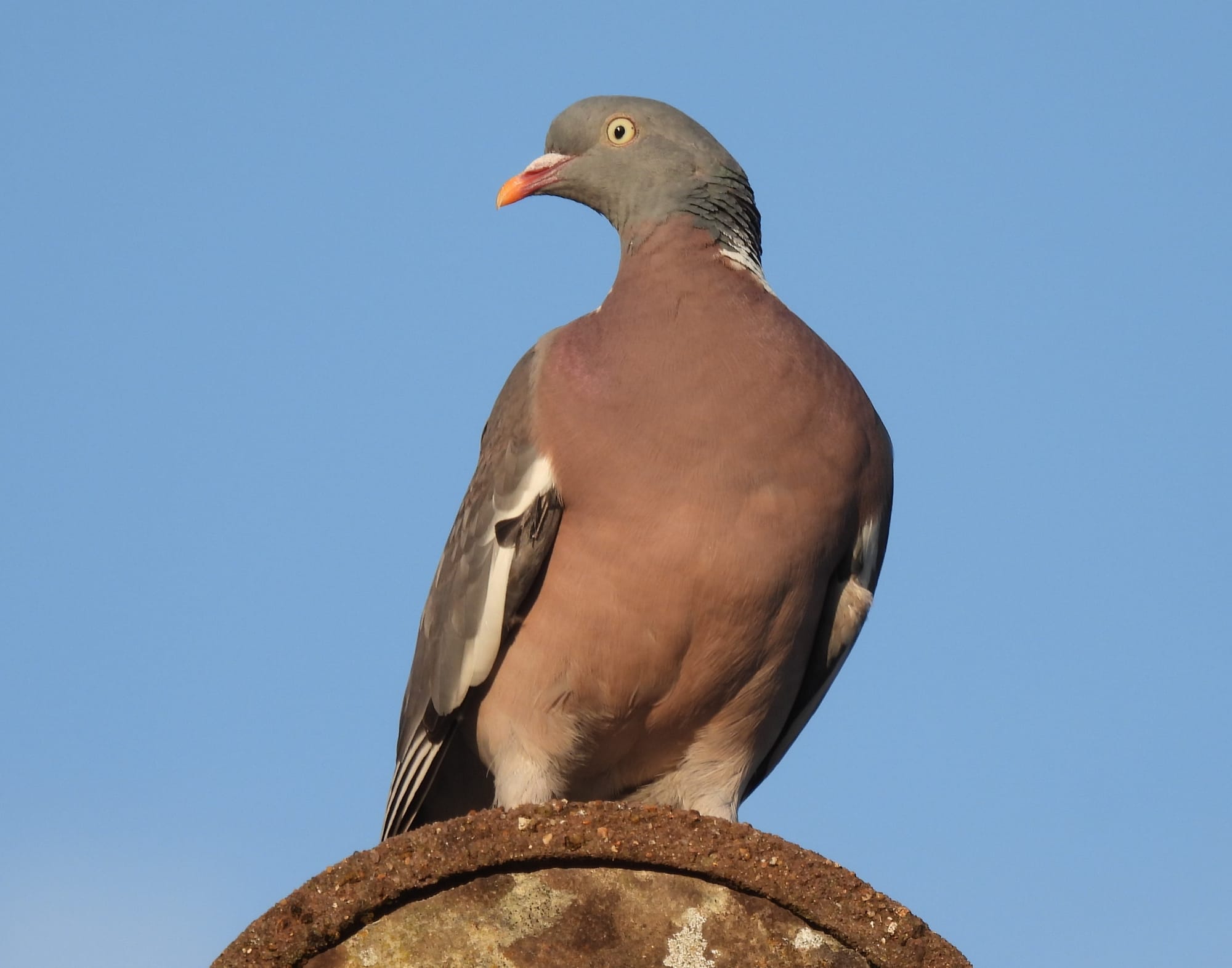
Our largest pigeon, the Common Woodpigeon is a familiar sight in gardens. Although originally a farmland bird, they have learned that gardens provide easy food and can often be found hoovering up fallen seed from beneath feeders. Once they have eaten their fill, they sit around for large portions of the day digesting their meal.
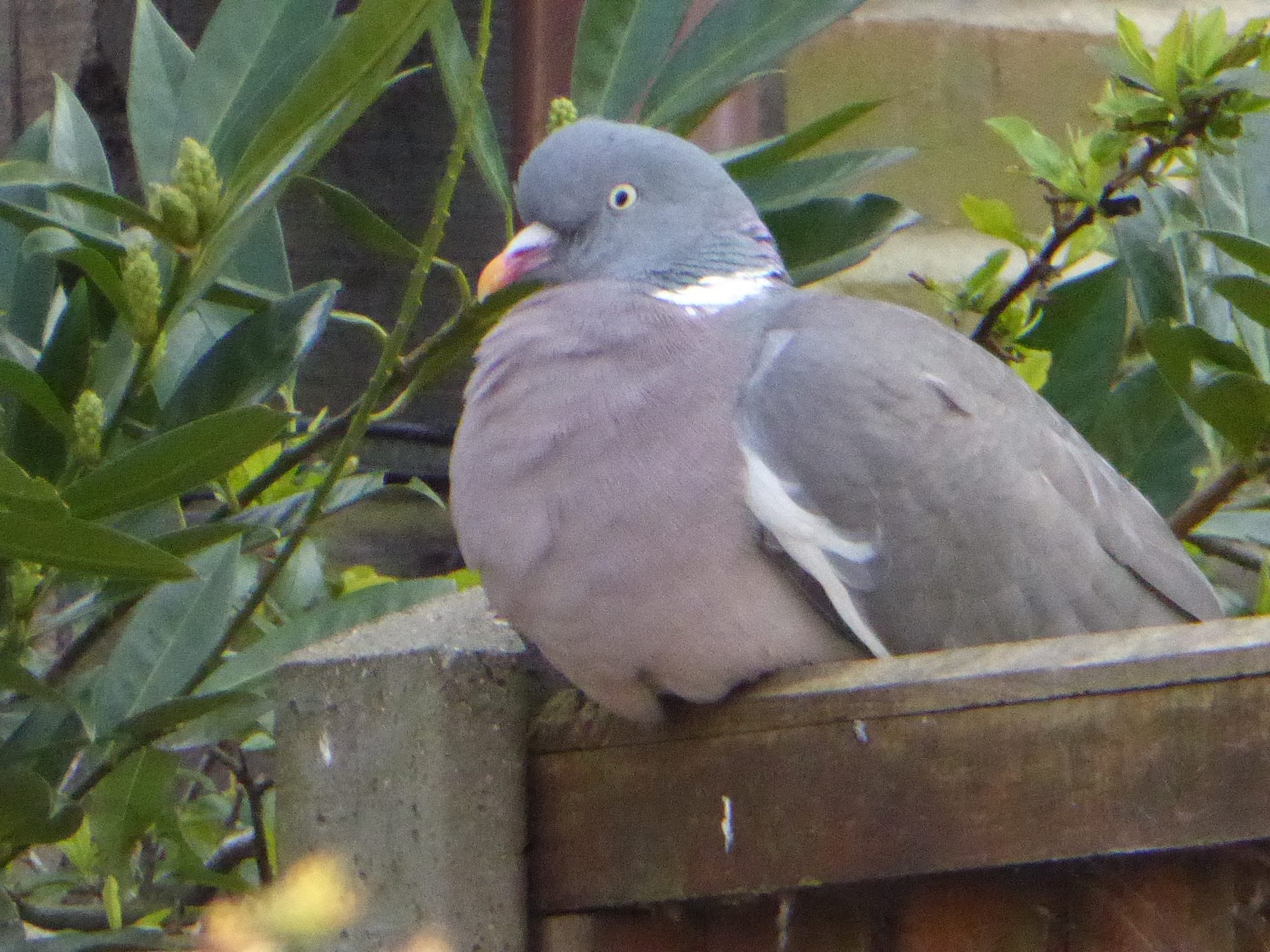
Their song is a five-beat coo, that sounds to me like they are saying 'I don't WANT to go'!
Earlier this week I saw 8 or 9 Woodpigeons eating beech nuts from the large tree on the play area in our street. They seem so ungainly when they walk on the ground, but in a tree they are surprisingly agile as they reach to eat nuts and soft fruits.
Eurasian Sparrowhawk
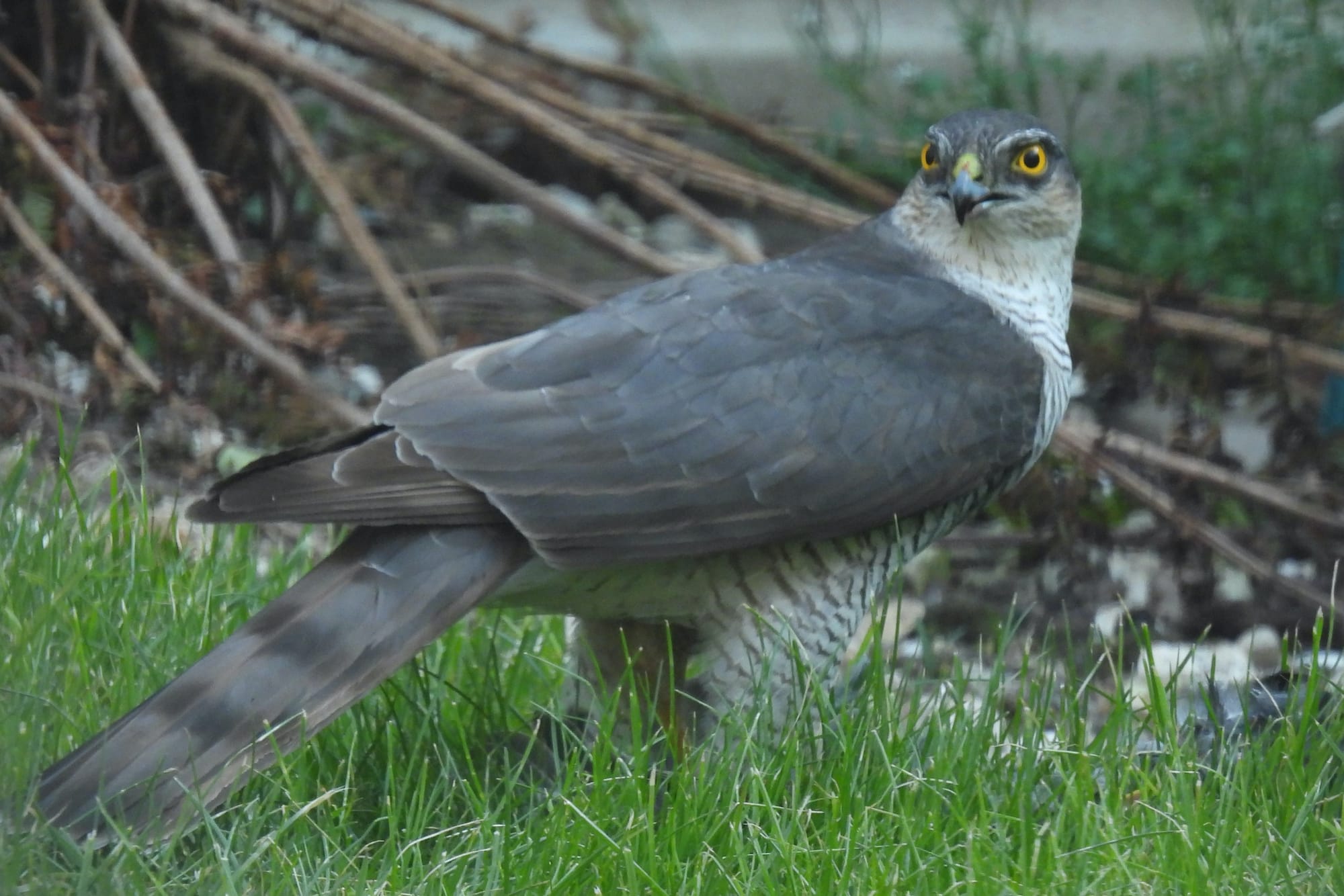
Disliked by some garden birdwatchers as it ambushes and kills garden birds, seeing a Eurasian Sparrowhawk in my garden is always a thrill. They are superb hunters, and use their short, rounded wings and long tail to manoeuvre quickly through trees and hedges in pursuit of smaller birds. They can appear suddenly and disappear just as quickly, but when they make a kill in the garden it gives an opportunity to marvel at their power!
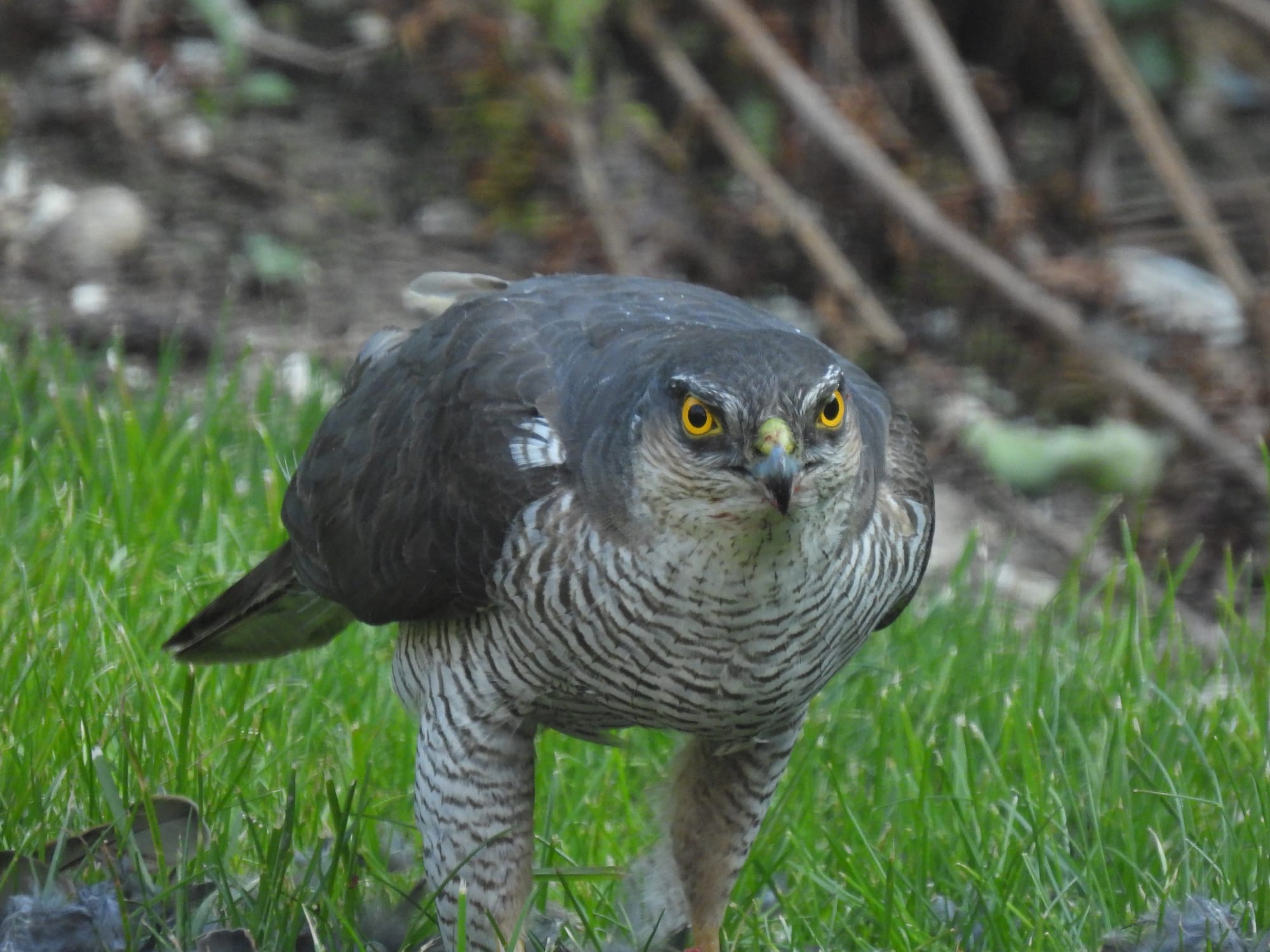
While it is sad when they kill our regular garden visitors, they have to eat too.
If we attract birds to our gardens with feeders, we have to accept that those little birds may well become food for these stunning hunters!
Red Kite
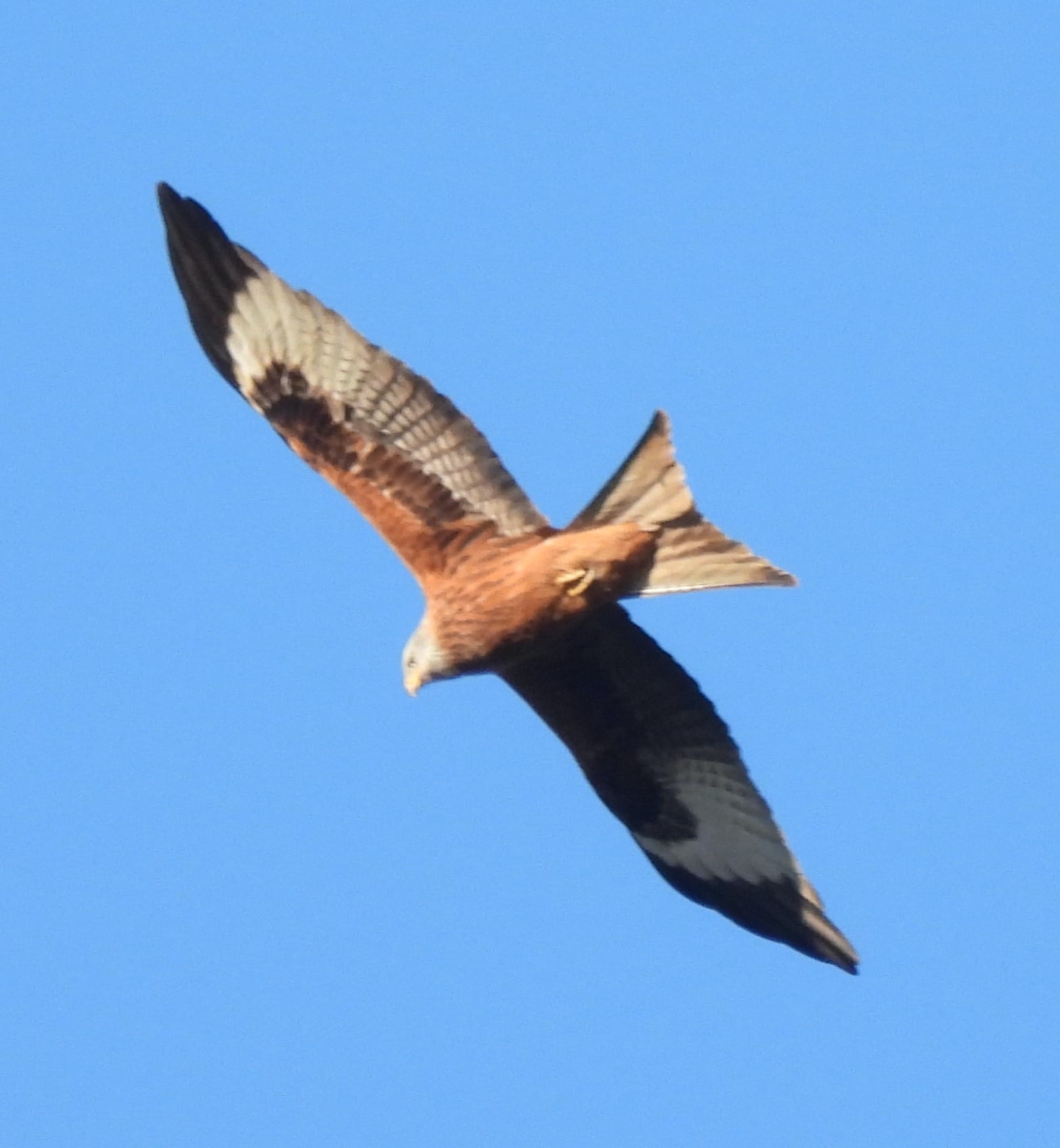
While I have never had a Red Kite land in my garden, we very often have them flying overhead.
The Red Kite is a magnificent bird of prey, with a beautiful rusty-red body, pale head, and distinctive forked tail. They seem to fly effortlessly and gracefully, their tail acting as a rudder to steer their path while they glide by on outstretched wings.
They were persecuted almost to extinction, but a reintroduction programme has proved very successful. They feed mainly on carrion and small animals.
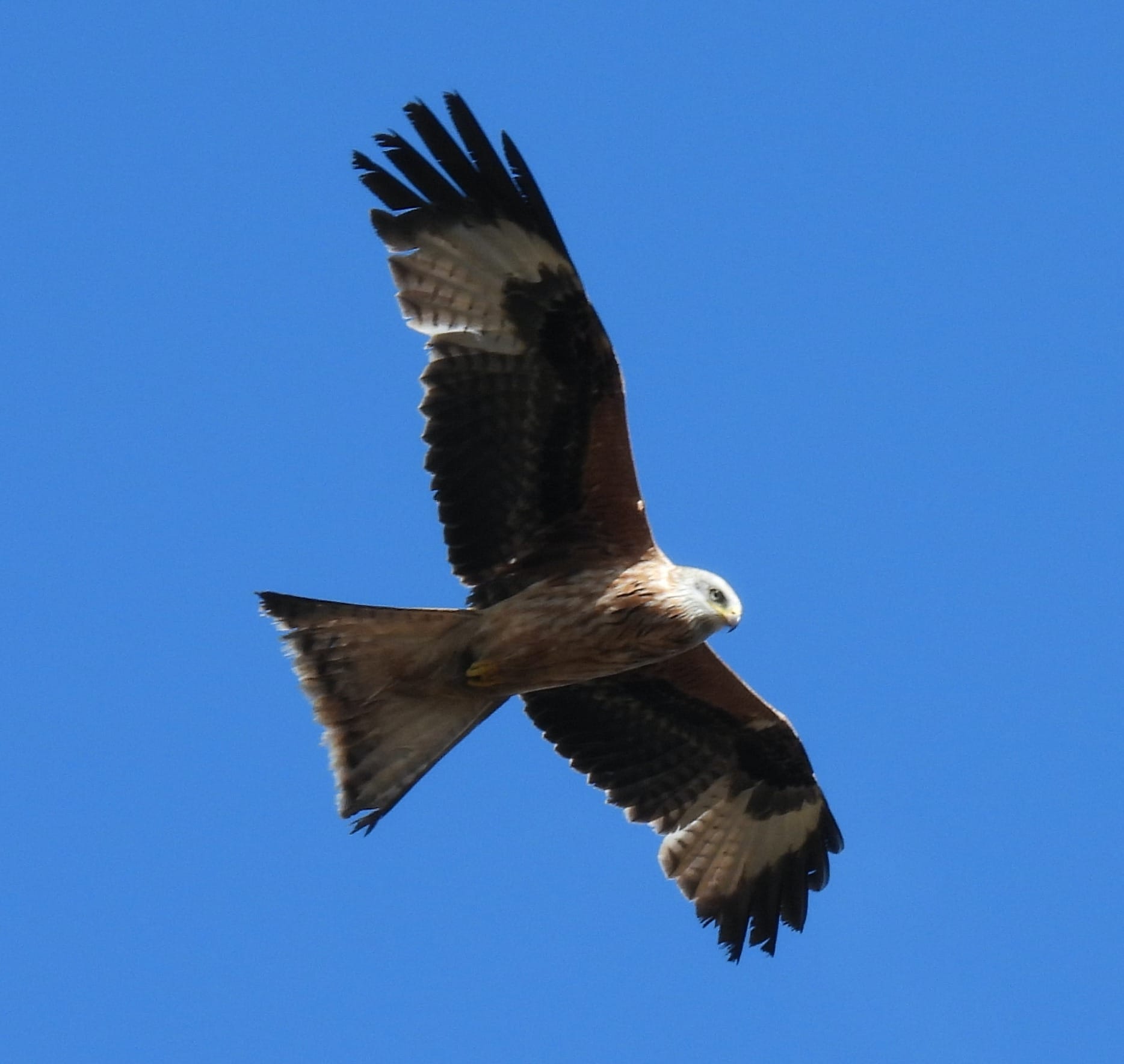
Whenever I am out in the garden I stop what I am doing to watch if one flies over. Once, I was pegging out my washing when one flew very slowly overhead. As I watched it fine-tune its flight with its tail, I realised it was looking straight down at me. So often we watch birds without their knowledge. It was a weird feeling to recognise that on this occasion, we were watching each other!
Please visit Suzy's website where you can listen to episodes and find out other information, and follow her on Blue Sky and Instagram.