September 26, 2026 - Scott O'Kelley, Guest Birder
Scott O'Kelley has been an avid birder for about 30 years. He was a writer and editor in a previous life but has worked in mental health as a counselor and administrator for the last 25 years or so. We have mutual friends in Athens, GA, as it turns out, but never encountered each other until he sent these photos to the inbox. I was very interested in these, since my COA will not allow top-floor balconies like mine have bird feeders. I want one of these so bad.
Where: Jefferson City, MO
When: late June
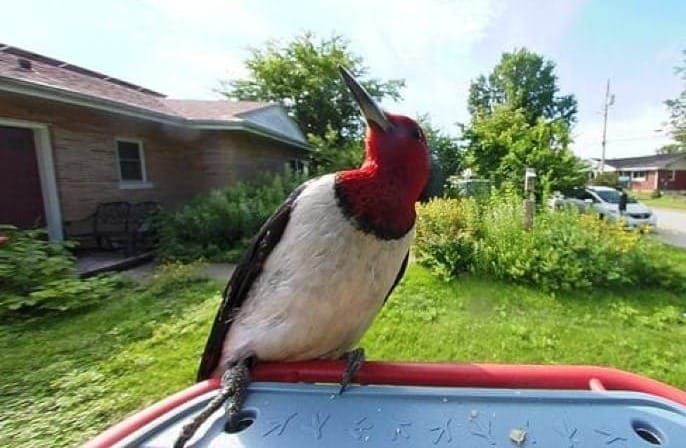
Bird of the Day: red-headed woodpecker
First of all, I despise tacking the term “smart” onto anything with wifi. Putting a screen on a refrigerator doesn’t make it smart, it just hastens the inevitability of something going wrong. But here we are: “smart feeders,” those bird-feeding contraptions with cameras. And I’ll admit they’re very enjoyable.
I’d describe myself as a casual birder. I love backyard gazing and the occasional outing, as well as those fluky glimpses out the window or while driving. But I really prefer to let the birds find me. Which some might call a lazy birder, but there’s nothing lazy about maintaining habitat, buying seed and suet, and cleaning and filling a dozen feeders (two or three more in oriole and hummingbird season). And since I’m always trying to up my feeding game, I was an early adopter of the “smart feeder.”
I now have three and would heartily recommend them to any birder, casual, lazy, or otherwise. Among the many benefits–birding from work, boring your coworkers, etc.--they also offer a truer account of your visitors.
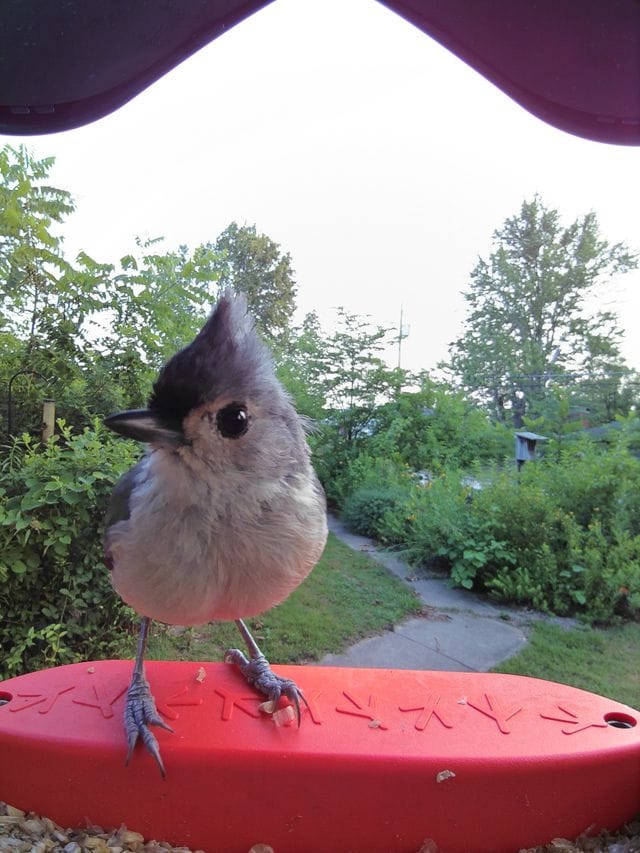
Take the red-headed woodpecker. A great bird and an all-time favorite, as striking for its stark red-white-black coloring as it is for its rarity at the feeder. Once as common as other woodpeckers, they’ve been in decline largely due to habitat loss, specifically their penchant for dead trees and rotten snags–features usually frowned upon by most HOAs.
Fortunately there’s no HOA in my neighborhood, so I can let things get fairly wild before there’s a nastygram from the city. There are also patches of unbothered woods dotting my interurban neighborhood, so my yard’s a popular waypoint and woodpeckers are plentiful and enjoyable visitors. Missouri has seven native woodpecker species and I’ve yardlisted all of them, including once when five of the seven were on the same tree at the same time. I even get regular visits from the pileated. But the red-headed remains an aloof, infrequent guest: I’ve been in this house about 20 years and get just a few red-headed sightings each year. So a red-head on the suet has always been an exceptional and solemn event, like a solar eclipse or electing a pope.
This year, I got my first digital snap of a red-headed woodpecker on the smart feeder. I audibly gasped.
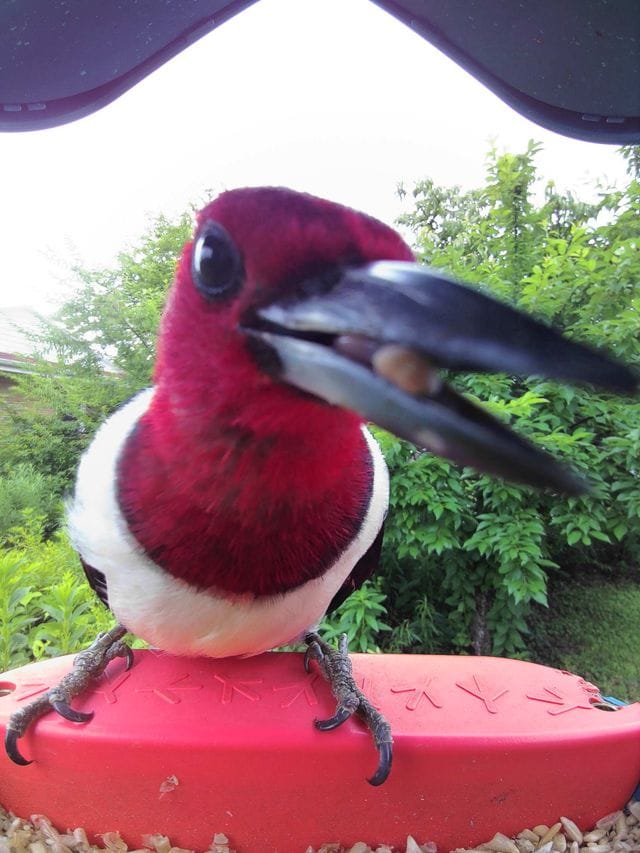
My brand of camera feeder is the Bird Buddy, but they all seem about the same. Since their release a few years ago they continue to improve: updated software, better sensors. The detection-to-photo time is getting closer to instantaneous. But the majority of photos (“postcards” in the Bird Buddy vernacular) aren’t exactly stirring.
It works like this: You get a notification on your phone–a buzz or a chime or whatever, just like a text–when the Bird Buddy delivers a postcard. Or you can turn off notifications and just check your phone when you’re bored at work like a civilized person. Most postcards (always a video and a few static shots) are usually bird spam anyway, especially this time of year: house sparrow, house sparrow, house sparrow, cardinal, house sparrow, bluejay, house sparrow, house finch, common grackle, house sparrow. Sometimes a squirrel. Or me filling the feeder. So a red-headed woodpecker on the Bird Buddy is thrilling. Because they’re a rare visitor.
Of so the red-headed woodpecker wants us to think. This is my first spring with multiple camera feeders trained on my small front patch and I’ve learned that red-headed woodpeckers are as common as sparrows. Well, grackles, anyway.
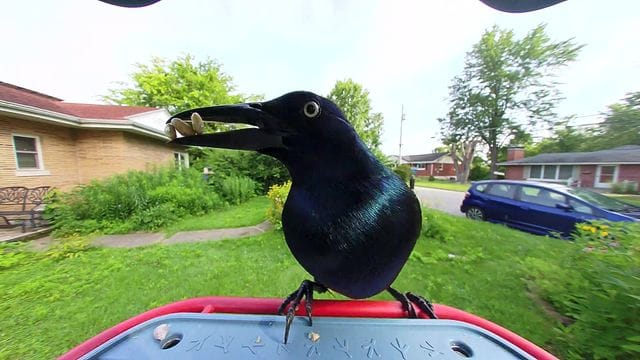
That once-elusive bird is a daily visitor, camping at the feeder and munching sunflower hearts like a reserve hitter in the dugout. Don’t get me wrong, they’re still wonderful visitors, but with a tad less mystique.
So maybe that’s one downside to the photo-feeders: They watch and capture and identify so I don’t have to and then feed me endless snaps (and videos) of birds just doing mundane bird stuff, chirping with their beaks full, looking disheveled. It can make beautiful but common visitors like jays and goldfinches and mourning doves ho-hum through overreporting, like a 24-hour news outlet.
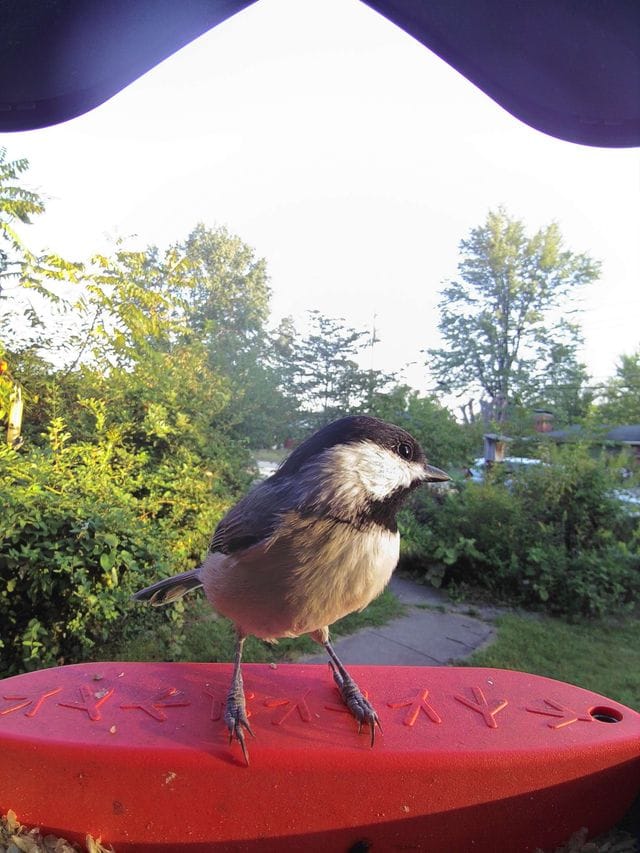
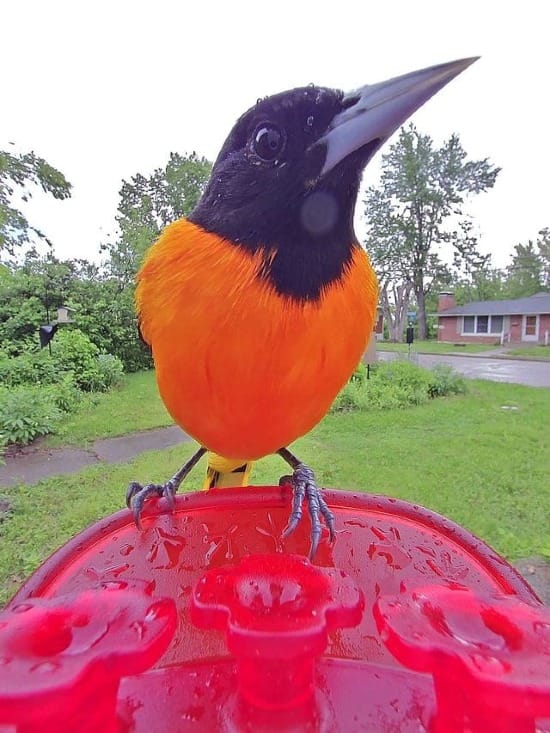
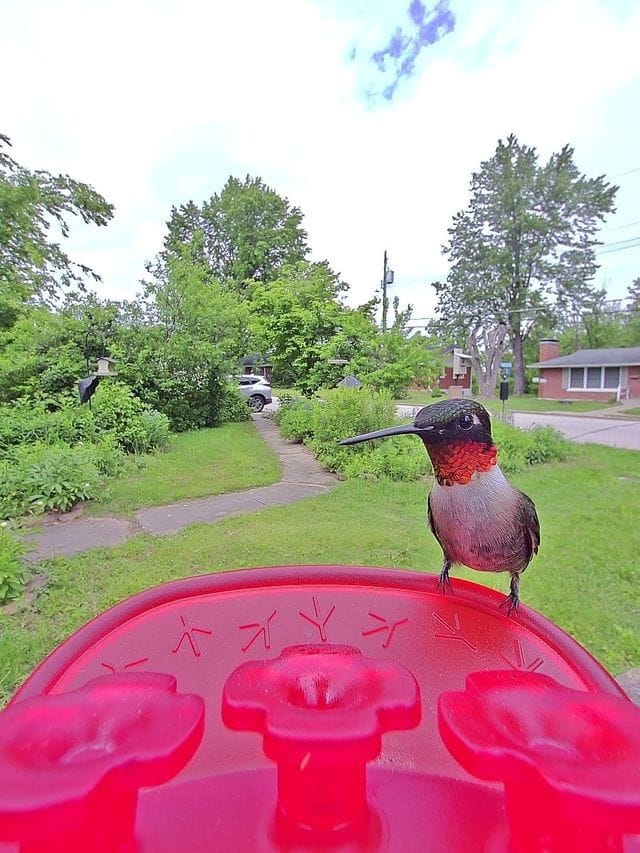
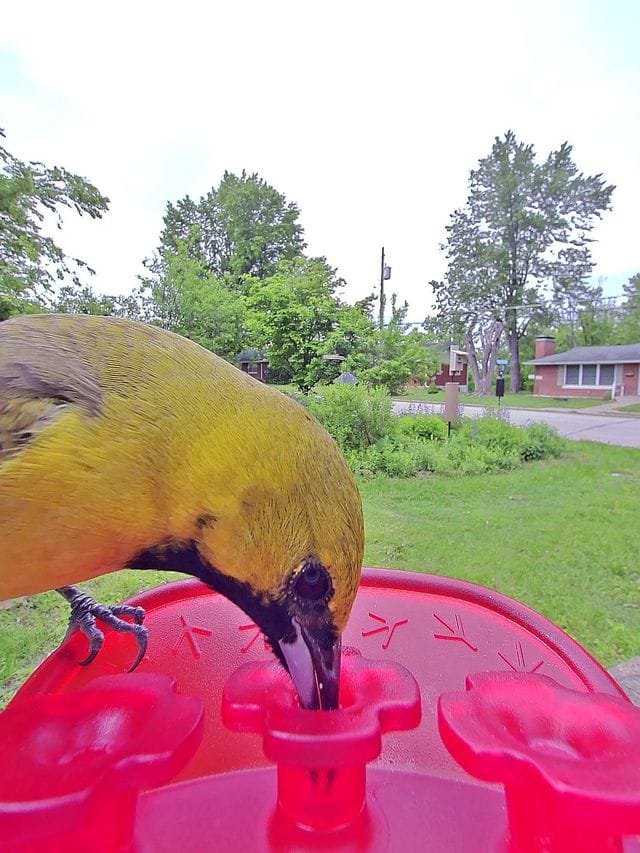
The feeders also, by dint of lighting, angle, timing, and general yard activity, offer a fresh perspective on birding. Documentary rather than portraiture. So birding becomes the whole event along with the spotted species and I love the happenstance of it all. Like when a young orchard oriole found the hummingbird nectar.
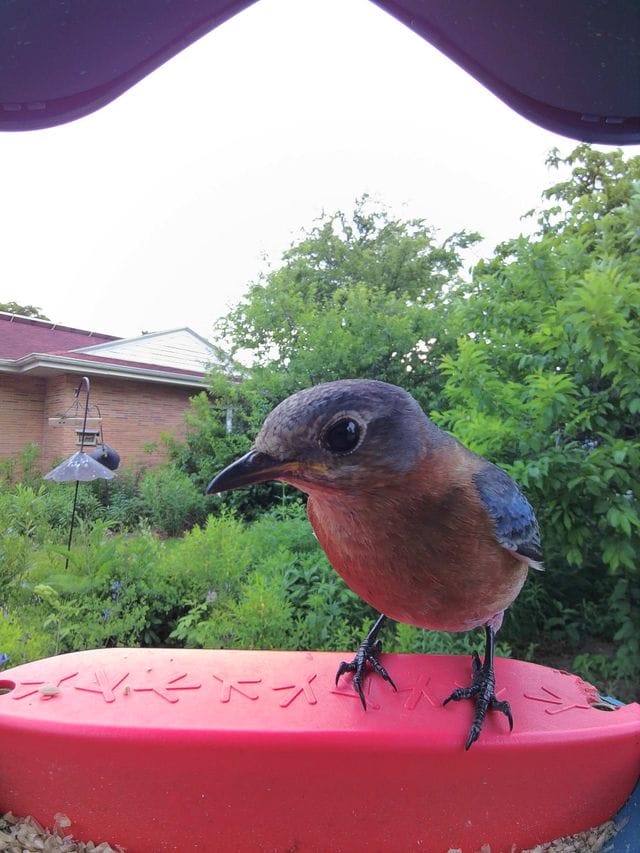
Or a bluebird was caught giving me side eye for an empty feeder.
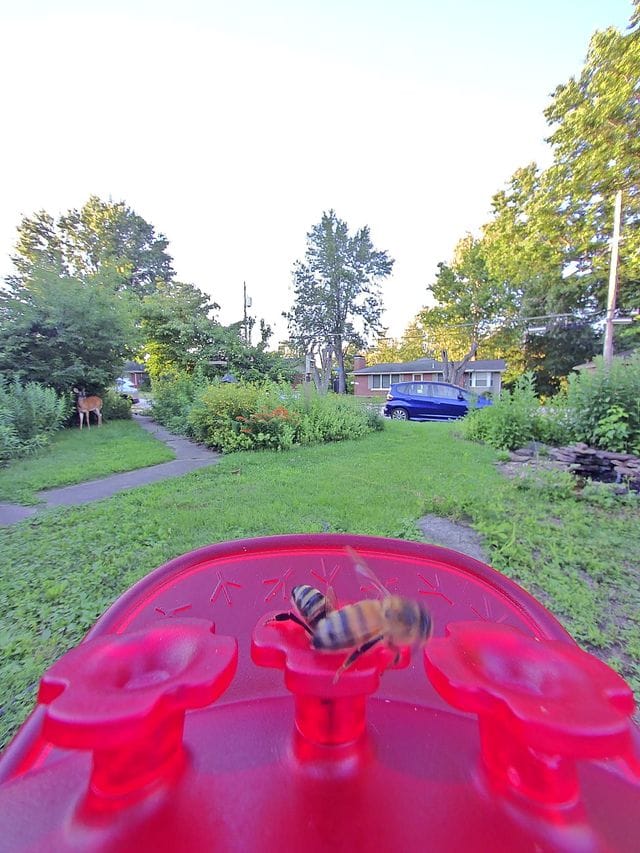
One of my favorite shots has been when bees discovered the humming bird feeder, swarming the port with the whole yard in a starring role and a deer looking on as she munched some wildflowers. Not a bird in sight, but still a very birdy scene.
Many thanks to Scott, for sending this in months ago and letting me save it for a rainy day. Want in on this? Send your bird thoughts and/or photo to skwbotd@gmail.com to be in the Back-Up Bird Bank.