February 5, 2026
Where: my complex
When: 9:26-9:48am. Please clap.
Bird Species: house sparrow, European starling, American robin, blue jay, house finch, northern cardinal, white-breasted nuthatch. Heard but not seen: red-bellied woodpecker.
Things I Thought About:
- I have 34 minutes to spare, and 11 shots left on this camera card. If something cool happens under a bush today the world will never hear about it from me. Let’s do this.
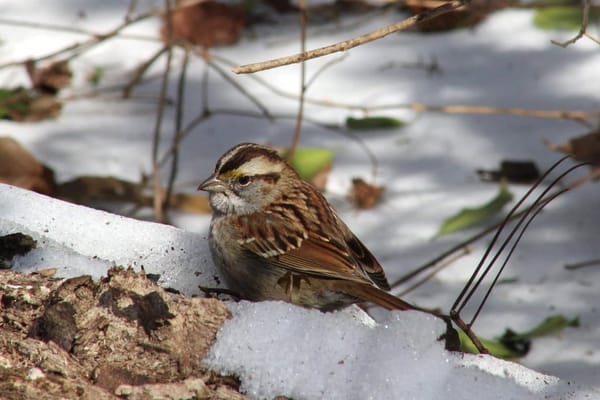
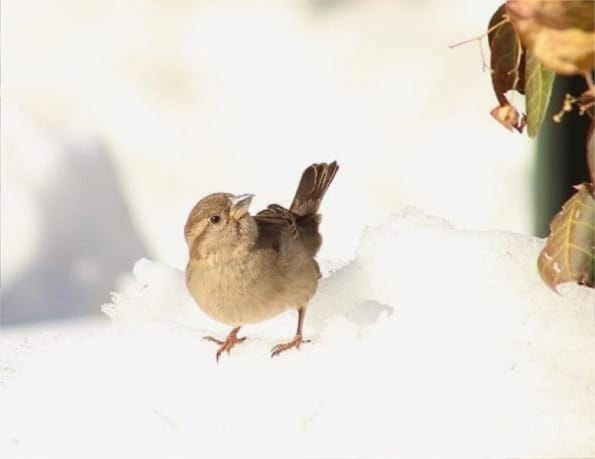
- Well, if it has to be a house sparrow, at least this one is playing in the snow and being very cute.
- When I was very little, like the mid- to late 70s, a lot of people had in their yards a type of outdoor furniture which was an all-metal sort of porch swing in a frame, but rather than being on chains, it was set into motion by metal tubes screwed together with a giant wrapped spring sort of mechanism. When you had too much weight on it, it made a very particular kind of metal-on-metal scraping sound at the upper joint. I’ve been trying to place that sound all winter, my brain kept throwing up “rusty swing set” but that isn’t quite right, too gritty. That vintage metal swing noise is what blue jays cawing sound like.
- When I was first getting into this, I was regularly mistaking blue jay calls for crows, and somehow, Disney probably, I thought mourning doves sounded like owls. I do pretty well with sounds now. By sight, I still regularly mistake Greater and Lesser yellowlegs for each other, and also mistake them for a whole lot of other shorebirds. And of course I am hopeless on warblers, but that’s more about how they won’t hold still than because I don’t know how to tell them apart. This is a great time of year to get into birds. Nobody looks or sounds like anybody else except downy and hairy woodpeckers.
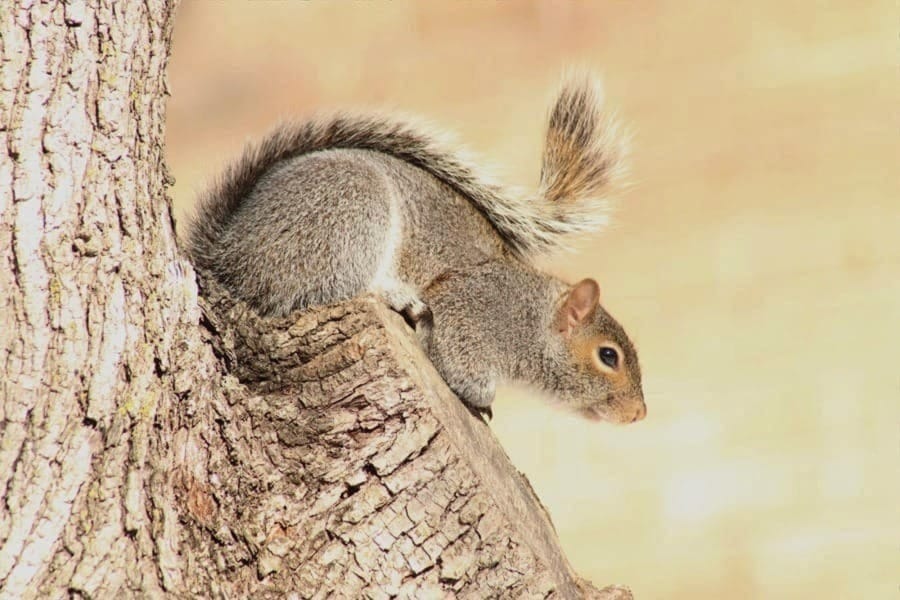
- Squirrels, I need you to stop being so photogenic. I can’t waste the shot, and I don’t like you.
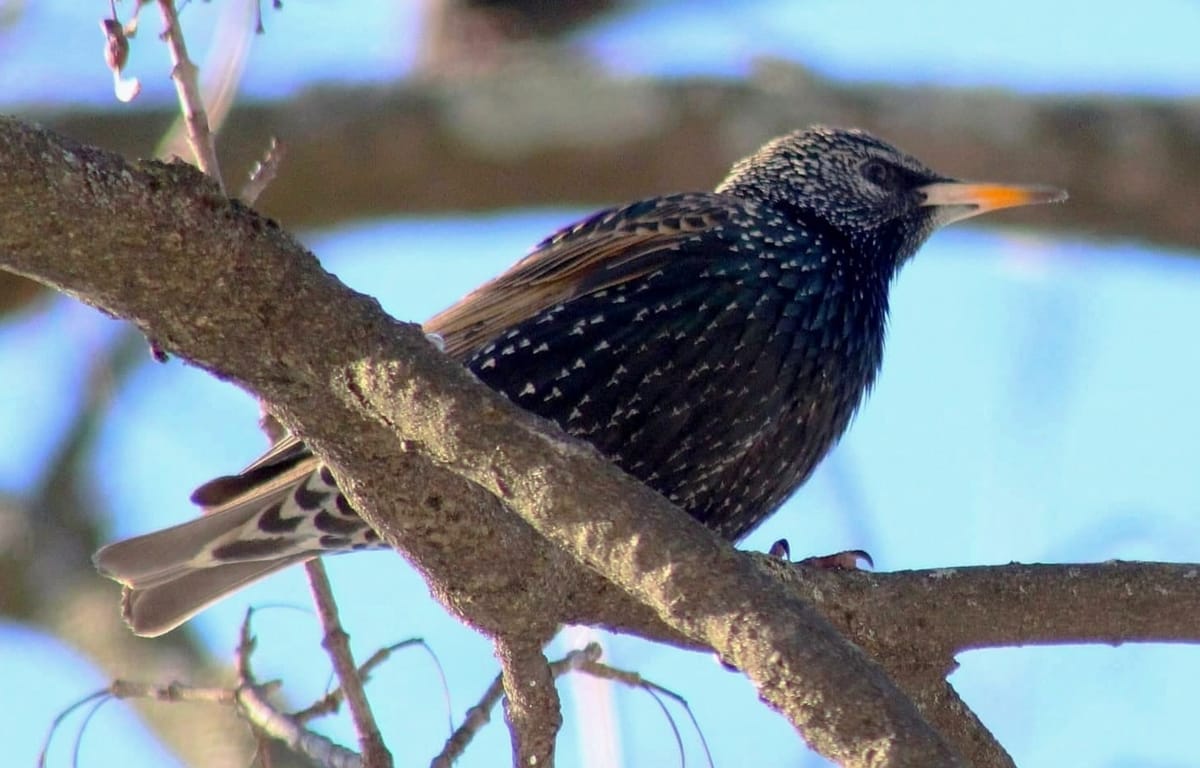
BOTD: the European starling, known in Europe as "the common starling." I will state upfront that they are considered a highly destructive invasive species, they are aggressive omnivores that can be ruinous to gardens and grain crops, and they hog all the good nesting sites. I am honor-bound to consider them a pest.
That having been said, they are a stunning bird, with a unique and singular plumage, and you kind of have to admire their toughness and adaptability. Each year starlings turn from polka-dotted white in the winter to glossy and dark in the summer, and they do it without ever shedding feathers. The new feathers that grow in the cold weather have those bright white tips, and then they just wear off through the season. By spring, they are a dark, iridescent brown. I wish the photo could capture all the green and purple shades they have in the sunlight. And that beak is very, very bright yellow. The first time I clocked a starling I thought it was a grackle that had picked up a big Cheeto.
Fun fact: the first starling nesting in North America resulted from a flock of about 60 introduced in 1890 in Central Park by amateur ornithologist Eugene Schieffelin. There is a popular, charming, and certainly apocryphal legend that this was part of his personal project to make North America a home to every bird mentioned in a Shakespeare play. I love this! But Eugene was the chairman of the American Acclimatization Society, and it's equally charming to me that immigrants to the US simply pined to see the birds and plants of their homelands.
These guys are noisy and rowdy and their murmuration (great word, that) can literally blot out the sun. A really unique bird. I'm not supposed to, but I like them an awful lot.