August 16, 2026
Where: Huntley Meadows Park
When: 6:45 am
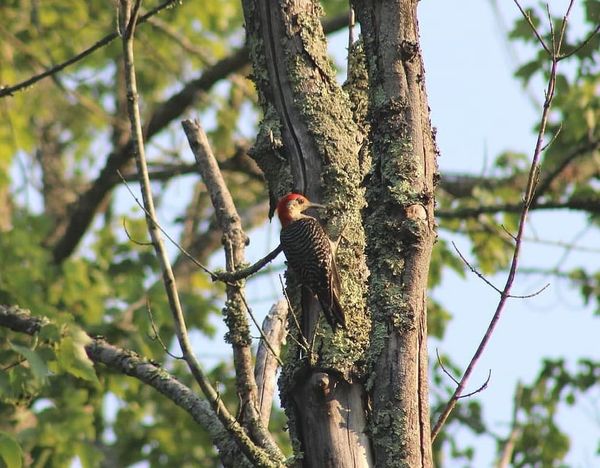
Bird Species: eastern bluebird, eastern wood pewee, American goldfinch, red-bellied woodpecker, tufted titmouse, downy woodpecker, gray catbird, barn swallow, ruby-throated hummingbird, blue grosbeak, eastern phoebe, blue-gray gnatcatcher, common yellowthroat, white-eyed vireo, solitary sandpiper, least sandpiper (lifer), greater yellowlegs, lesser yellowlegs, laughing gull, killdeer, Canada goose, red-winged blackbird, osprey, green heron, great blue heron, double-crested cormorant, great egret, wood duck, purple martin, northern cardinal, Carolina chickadee
Things I Thought About:
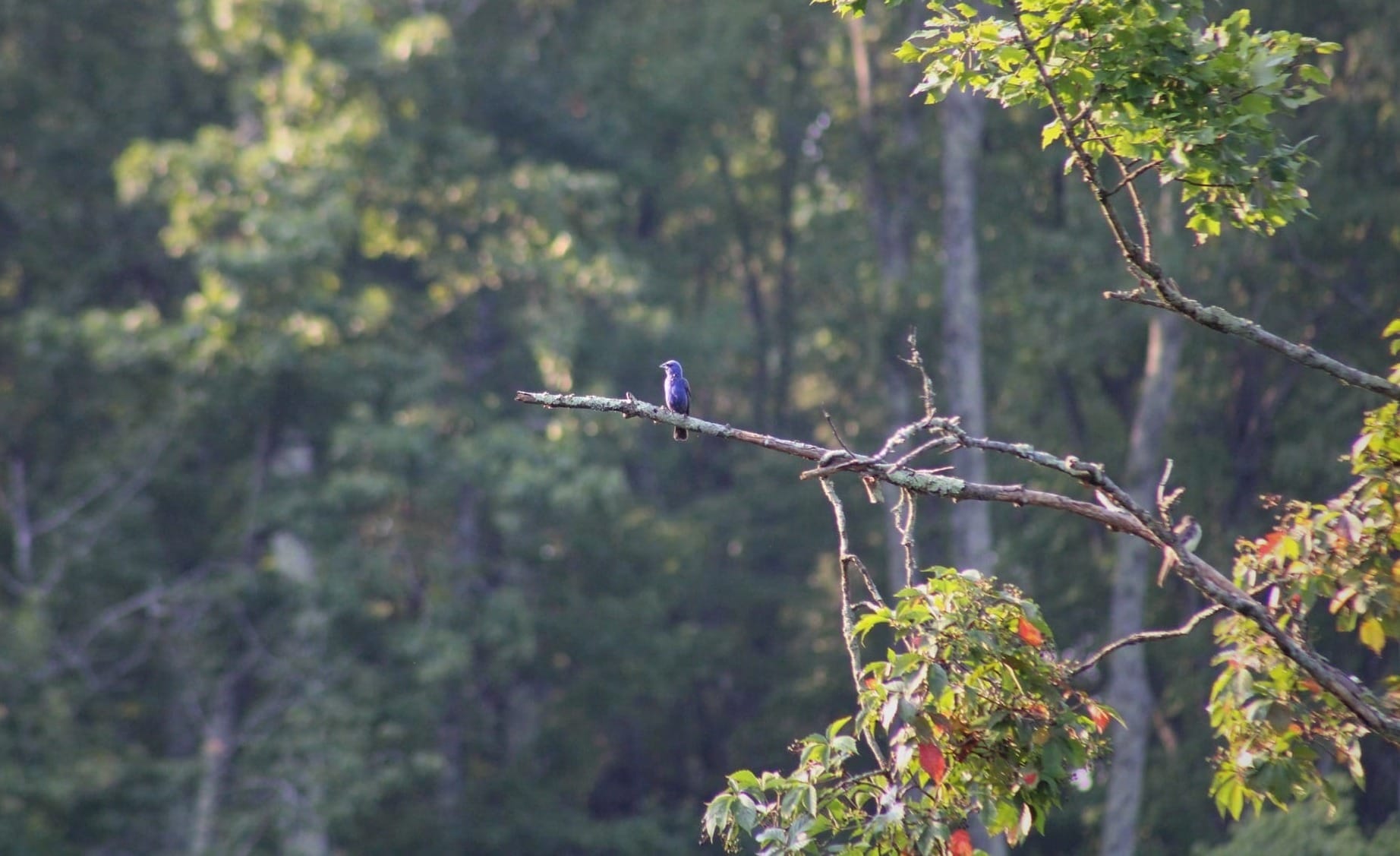
- The ratio of eastern wood pewees I've heard vs. eastern wood pewees I've seen has got to be 10:1, and I spotted one right away yesterday morning. I listed eight birds before I was halfway to the boardwalk. I hear a blue grosbeak singing, follow the sound onto the meadow proper, and it's one of the kind that is actually blue. A terrific start to what turned out to be a great morning.
- I don't think I'll be able to adequately describe a lot of what was going on in my mind yesterday morning, to be honest. Just know that it was a very good morning. I felt good in my body, the weather was nice, everyone I encountered was very pleasant. I probably would have written something uplifting and inspirational as all hell. A real Swamp Church visit.
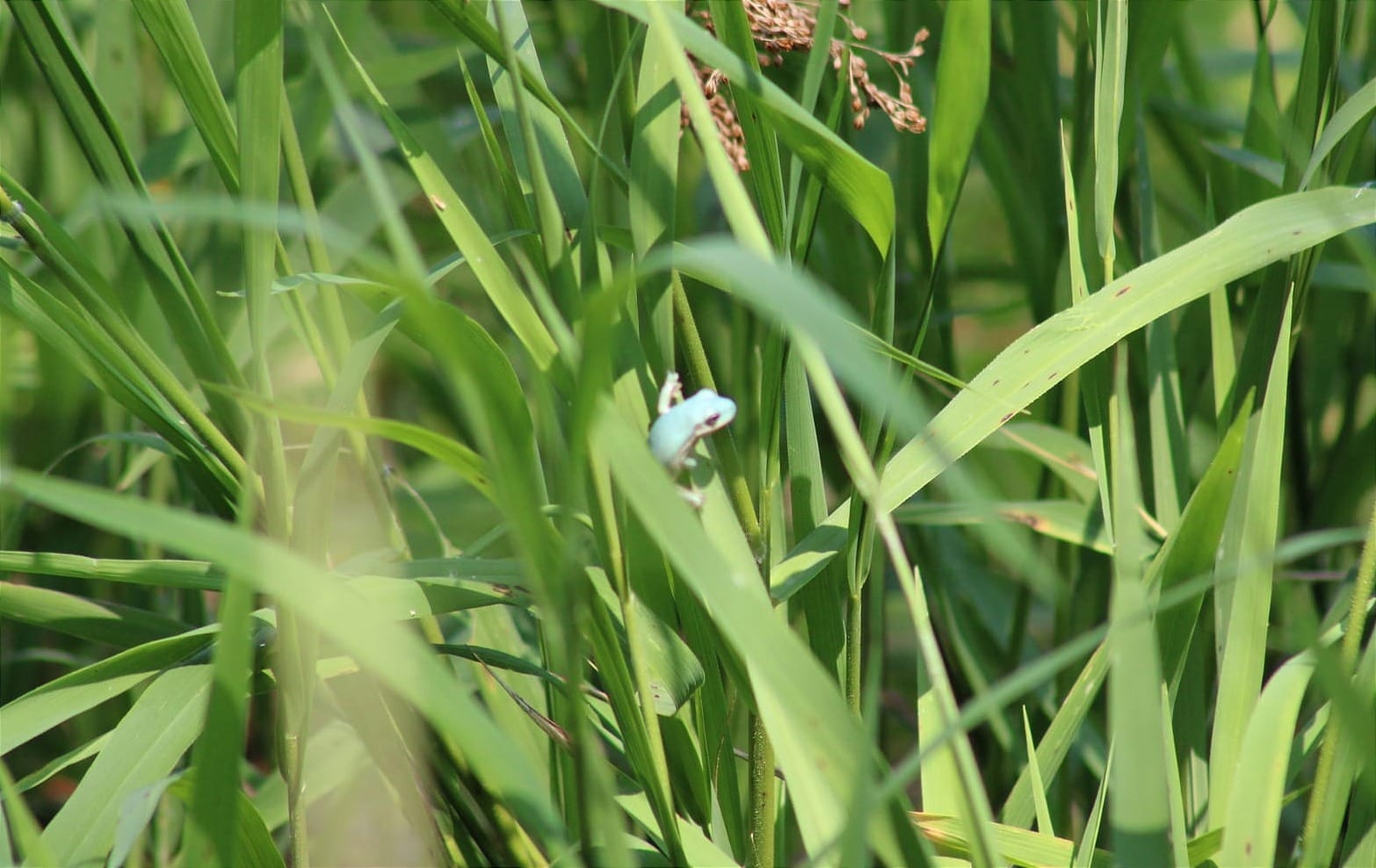
- Remember, there is nothing to stop you from finding a green tree frog that is blue and worshipping it as a lesser God.
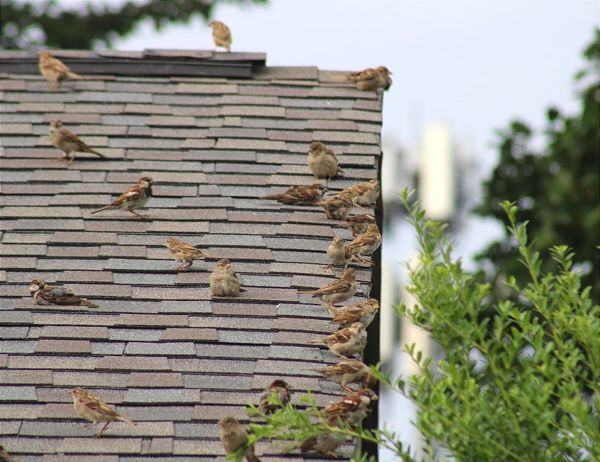
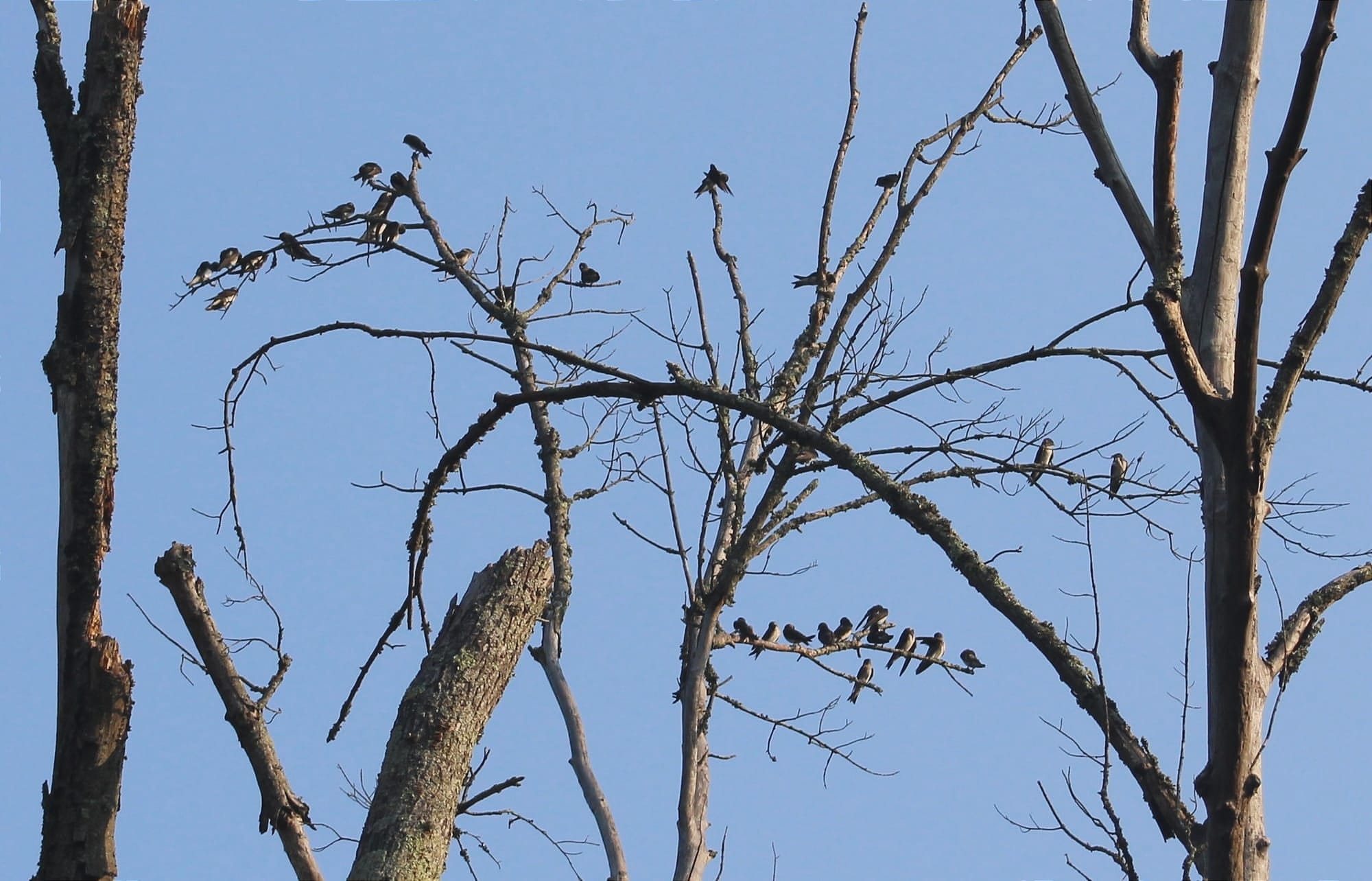
- Well, this is interesting. I will have to look this up when I get home; I have seen swallows settle down in a tree together, but not like this. This is a bouquet of swallows.
- Huntley is a managed wetland. A lot of visitors struggle with that concept; they'll come once or twice a year and be astonished or dismayed by the change in the water levels. Three years ago, they allowed the main pond to dry almost completely, to the point that plant cover fully grew over it, and you could see deer foraging where the osprey fishes today. This is very good for the park as a whole. The next year, with the ponds filled up again, it became much more attractive to ducks with all the new green under the water, and the duck poop enhances the soil structure so that the ponds retain more water in coming seasons, which attracts more wildlife of every variety.
- You'll see wetland scientists out here a few times every year, taking core samples, so last time they were out I simply asked how the wetland is managed to learn this. They don't pay too much attention to the water levels, they pay attention to health of the soil, which is less glamourous but significantly more important.
- The center pond has become extremely low this summer, and it has created a huge mudflat beach, and a bunch of shorebirds have moved in this week. It's kind of surprising how quickly it happened. I have a lot of sympathy with the "this is not very pretty" complaints, but you don't get too many chances to see shorebirds inside the Beltway.
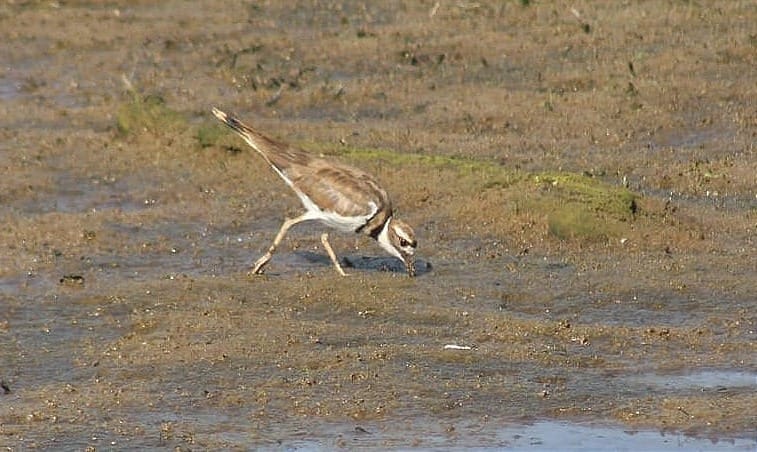
- Killdeer are my favorite. You should see them run, they look like little video game characters; so quick with that bold neck band and a bright red eye. They also call in an incredibly high-pitched squeak. They seem kind of made up, actually. I was very patient with this one, and he rewarded me by staying just out of reach of a really crisp photo. Nevertheless, he was a treat to watch for while.
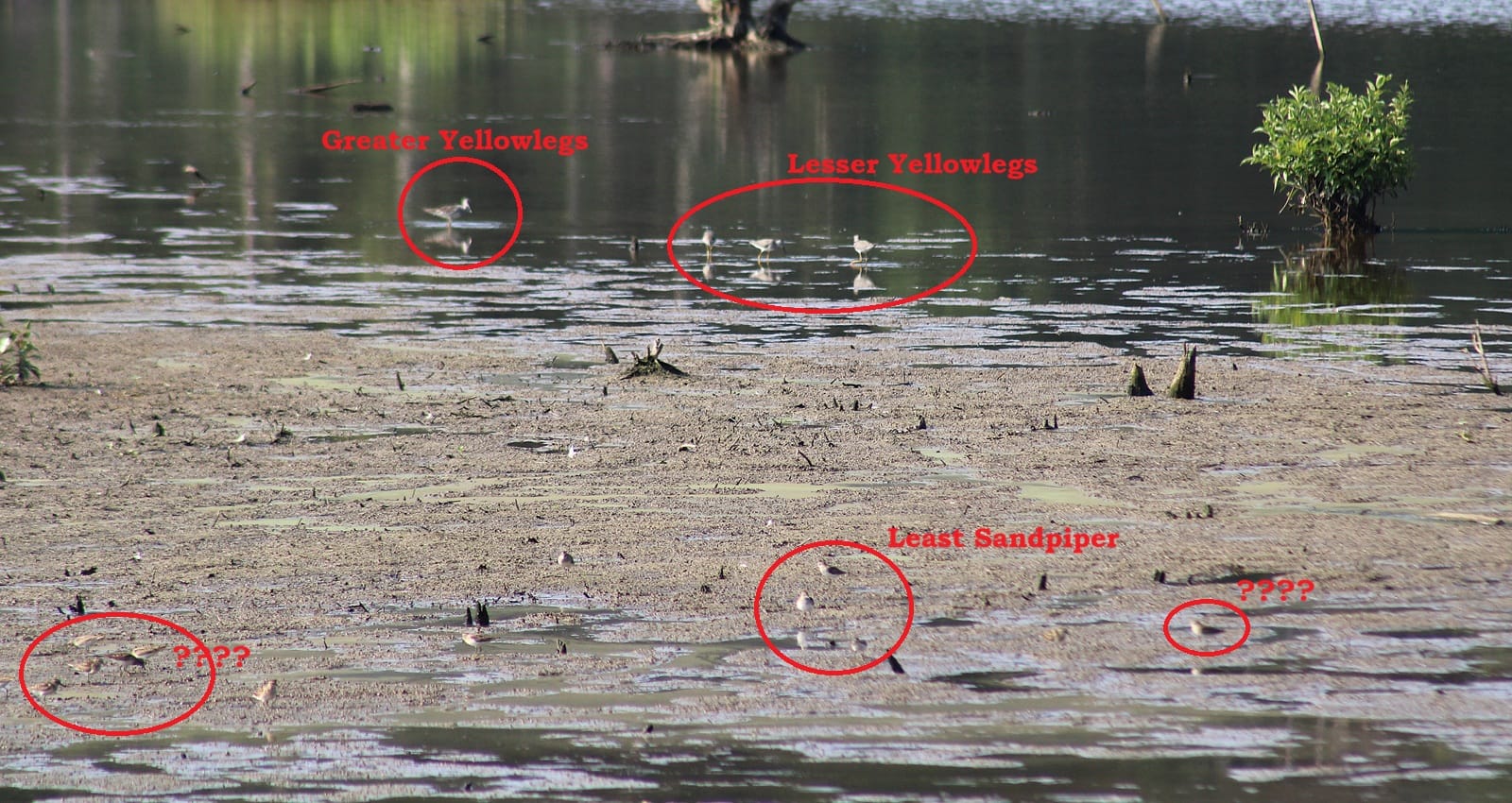
- I have said that shorebirds are difficult to identify, and about 45 versions of the photo below are what I had to work with. The action was mostly concentrated on the far side of the pond from the boardwalk, which is now essentially a beach. A little group flew in to join a little group that was already there, and there were three or four yellowlegs behind them in the water. The killdeer and the solitary sandpiper were on my side, but they are the two I was already confident about IDing. I am pretty sure there were a least two types of sandpipers over there, but I only listed the one I felt certain of, after zooming in on a lot of photos and asking a lot of apps and birding groups.
- The problem with the birding tech is precisely how crowd-sourced it is. I went to see what other people had listed, and there were some pretty...optimistic guesses. There is no fact-checking, so someone can list a Wilson's phalarope and that's on the record as having been seen at Huntley. In fairness to this person, the little camera icon on Bing image search also pulled Wilson's phalarope on one of my photos of a bird in flight, but one look at his range map tells you it would pretty damned remarkable if it was one.
- Look at this list. I am more than half convinced there are only like five per coast, and everything else is about mud patterns or ornithologists infighting.
- Anyway, if someone wants to forward my long distance, hopelessly pixelated photos to an expert and tell me it was a Wilson's phalarope, I have started a new page for ID help. Sound off in the comments, as they say.
- After getting my fill of the shorebirds, I staked myself out to watch the osprey fish. Once again, my patience was not rewarded; he made tight circles almost directly overhead for ten minutes but never dove.
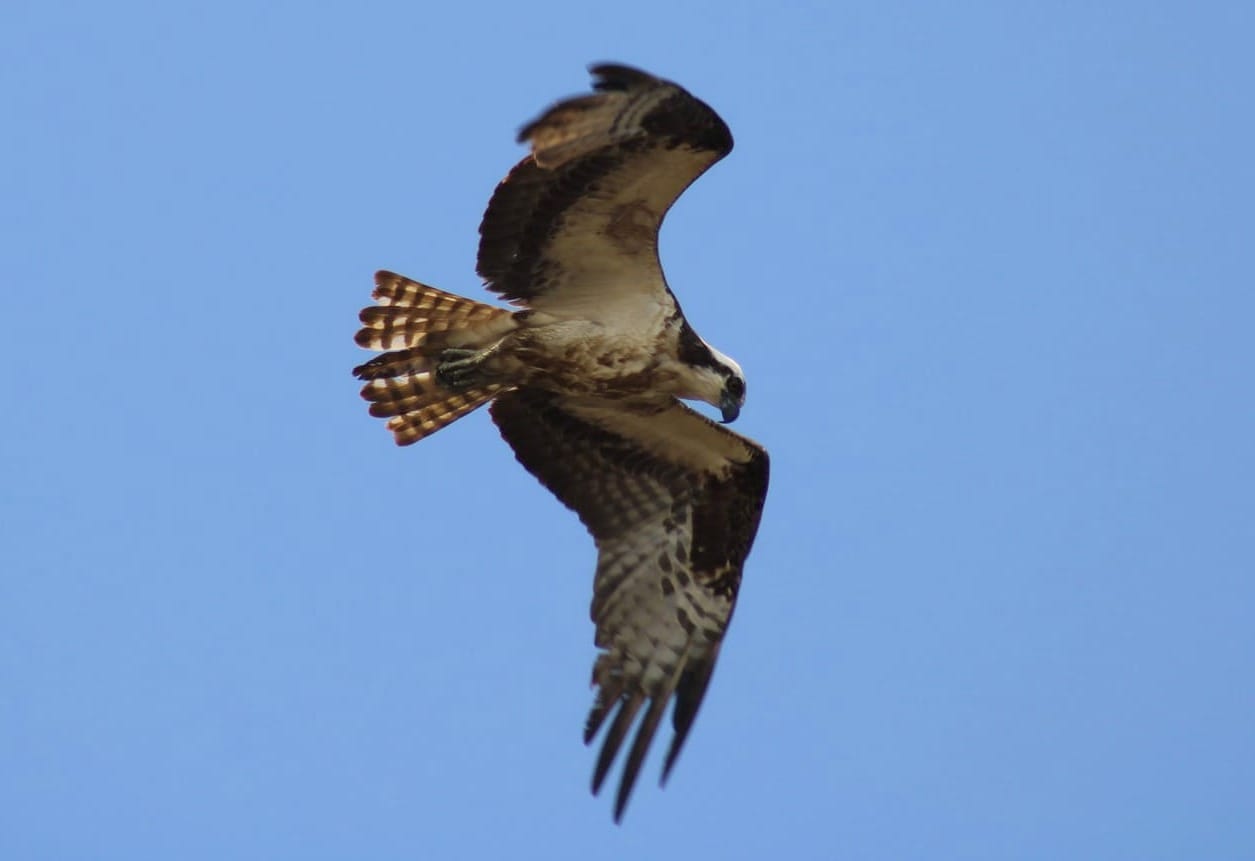
- A lot of people passed by, and the clearest conversation I could hear was a couple with a small child, all clearly pretty tired and ready to call it a day. The mom pauses to say, "Oh look, more herons, white ones." The child says, "How do you know they are herons?" and the mom says, "I just know, Henry. You grow up, and you learn things, that's what happens."
- The birds are egrets. I briefly fantasize about what saying so would do the conversation on the car ride home, but I am a nice person.
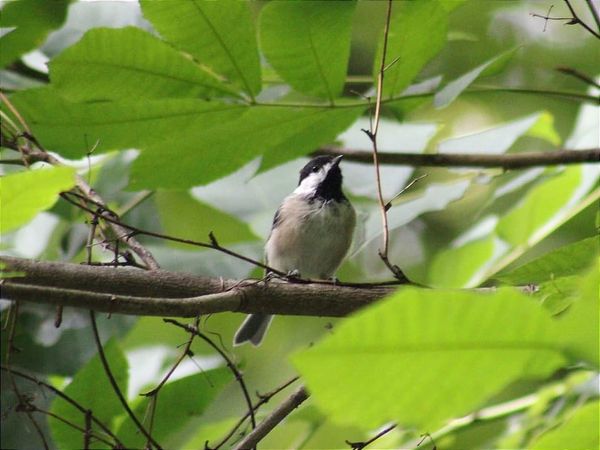
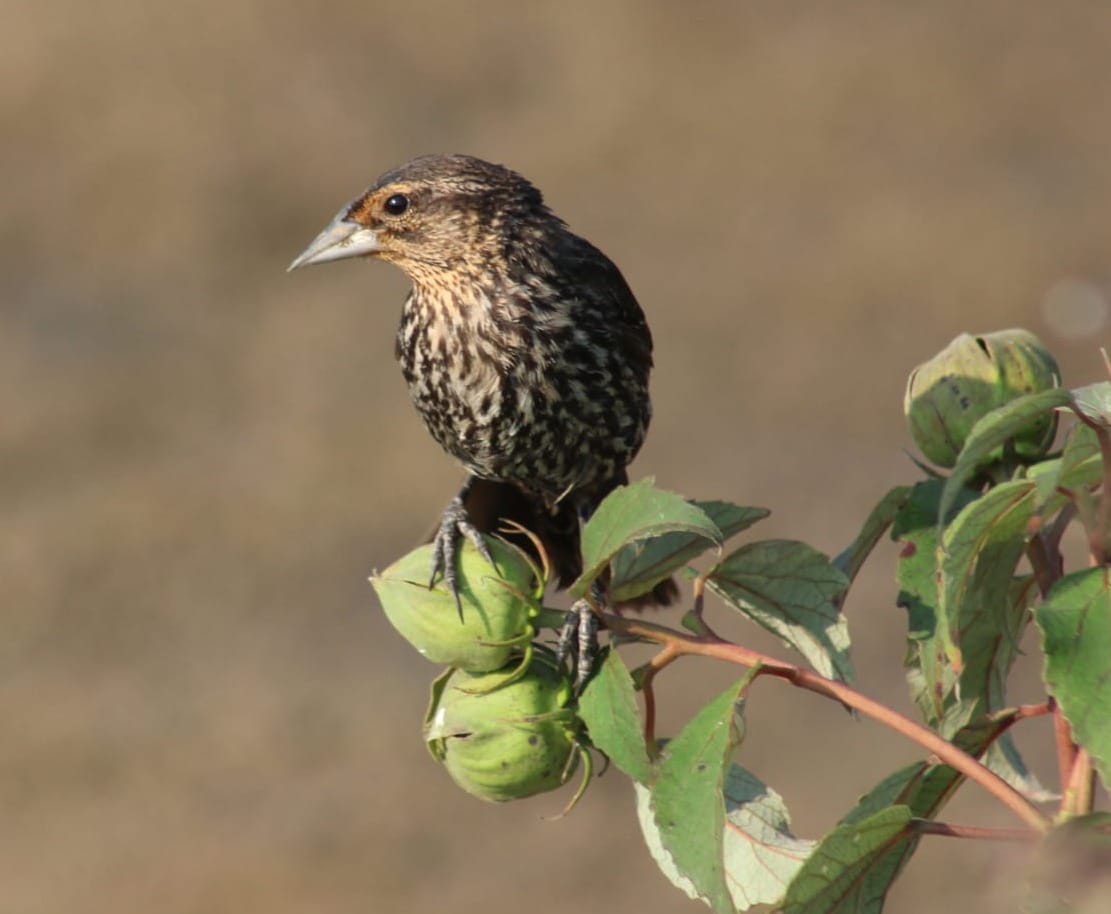
- Well, now, this is just a beautiful lady. I can hear her maniac husband screaming somewhere, but she seems like a real sweetheart.
- I accidentally stayed at the swamp for five and half hours. Then I accidentally napped for six and half hours. Eight hours tonight between 9pm and 7am or I die, probably.
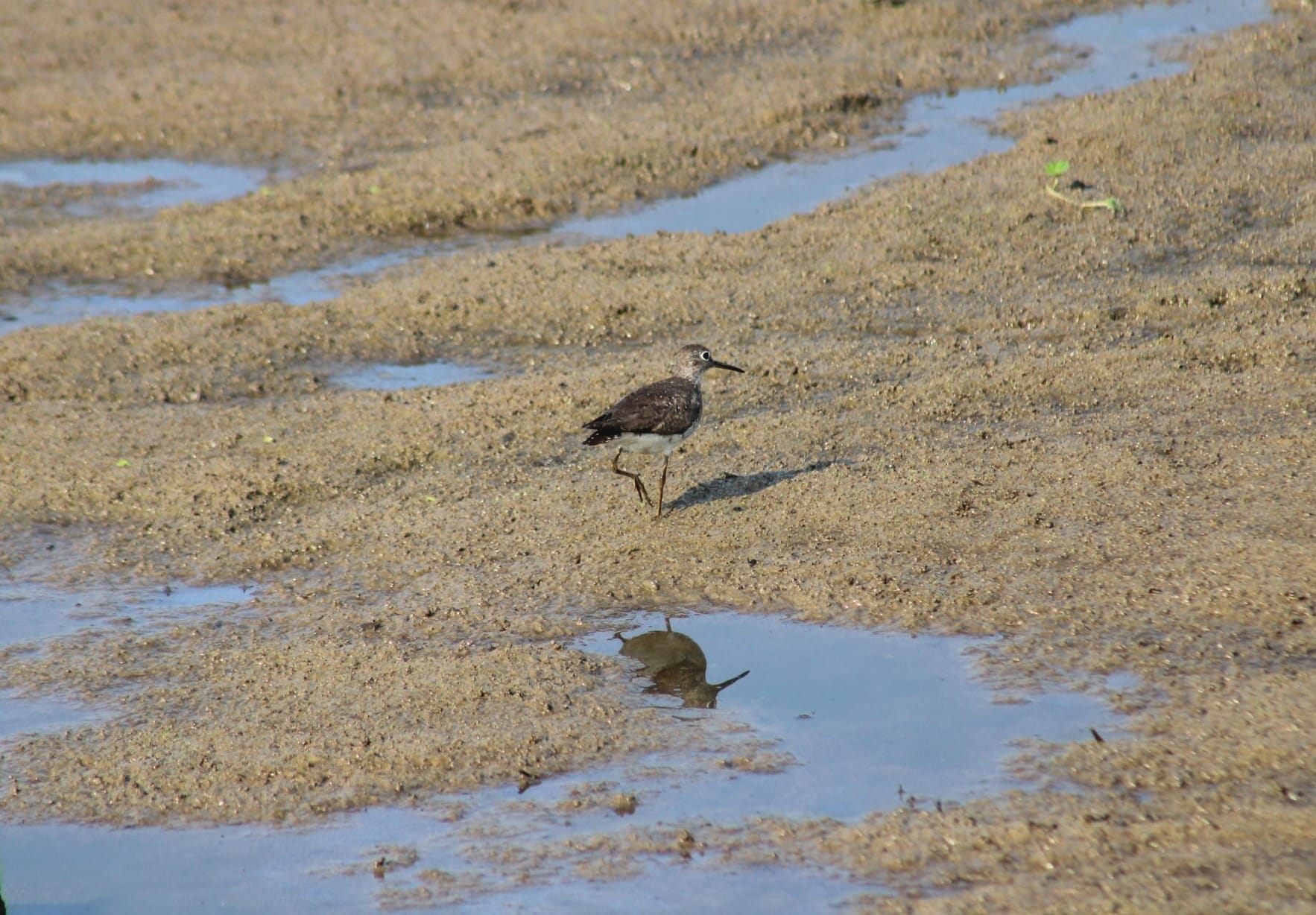
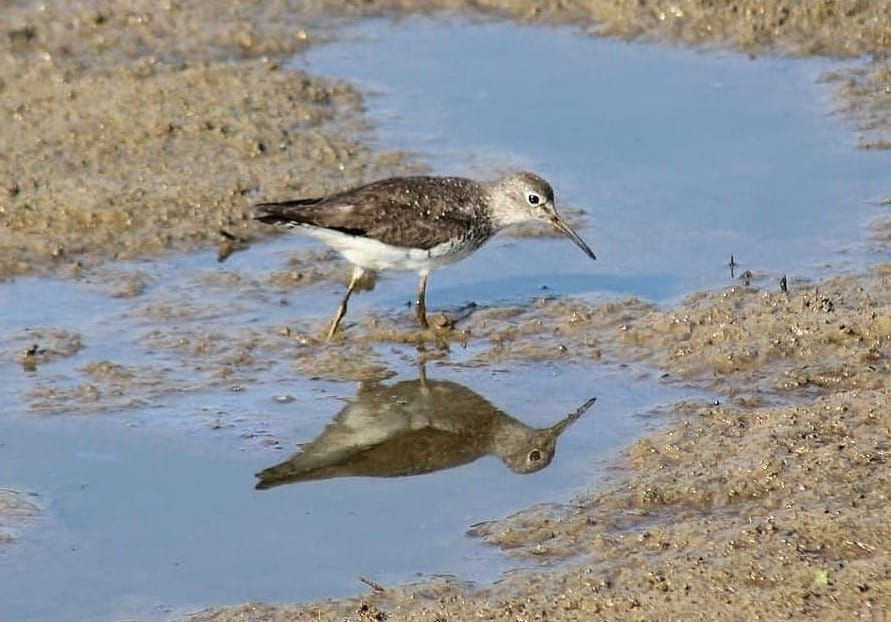
BOTD: Solitary sandpiper. Shorebirds in general were my birds of the day, but this guy was the most cooperative for photos. I like the reflection in the featured photo, and he by far came the closest to me (not especially close.)
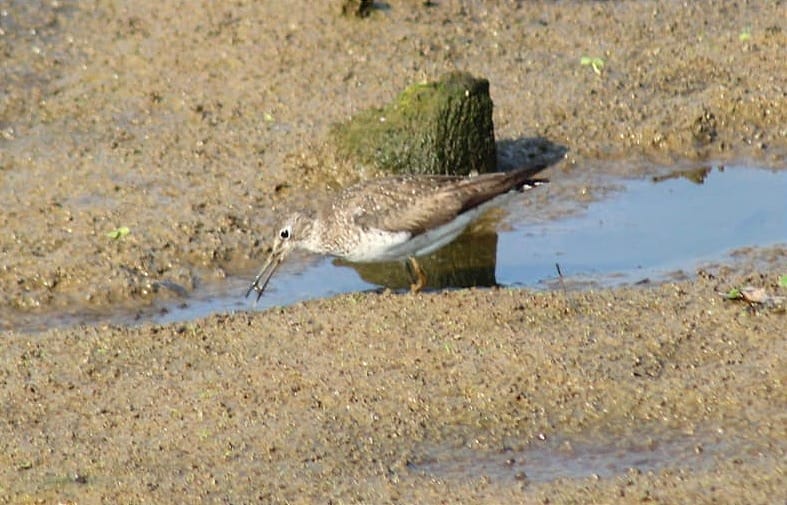
This is the sandpiper I have seen the most often, and as you all know I am a sucker for a solid white eye ring. The spotted sandpiper looks pretty much exactly the same, but he tips his whole body up and down constantly while he forages. Most of the differences between all of these birds are either behavior-driven like that, or minute enough to be worthless as markers. "Has slightly longer legs and wider color spread on the wings than another kind" only works when you see them both together. And when you see a bunch together, some on the ground and some in flight, it's chaos. I for one would be grateful if shorebirds would line up based on height, and then sort by coloration.