April 28, 2026 - Patrick Doyle, Guest Birder
Guest Birder of the Day: Patrick Doyle, who readers of the blog will be thrilled to learn is my osprey pal! When we went birding together in Maryland, I saw my first indigo bunting, Baltimore oriole, American redstart, tundra swan, solitary sandpiper, and eastern wood peewee. Banner day. At one point, Patrick did that Advanced Bird Dork maneuver of going down to one knee with the binoculars still to his eyes, and then said, "Don't tell anybody I did that," but he looked cool, actually.
Where: Brooklyn's Prospect Park
When: March 2021
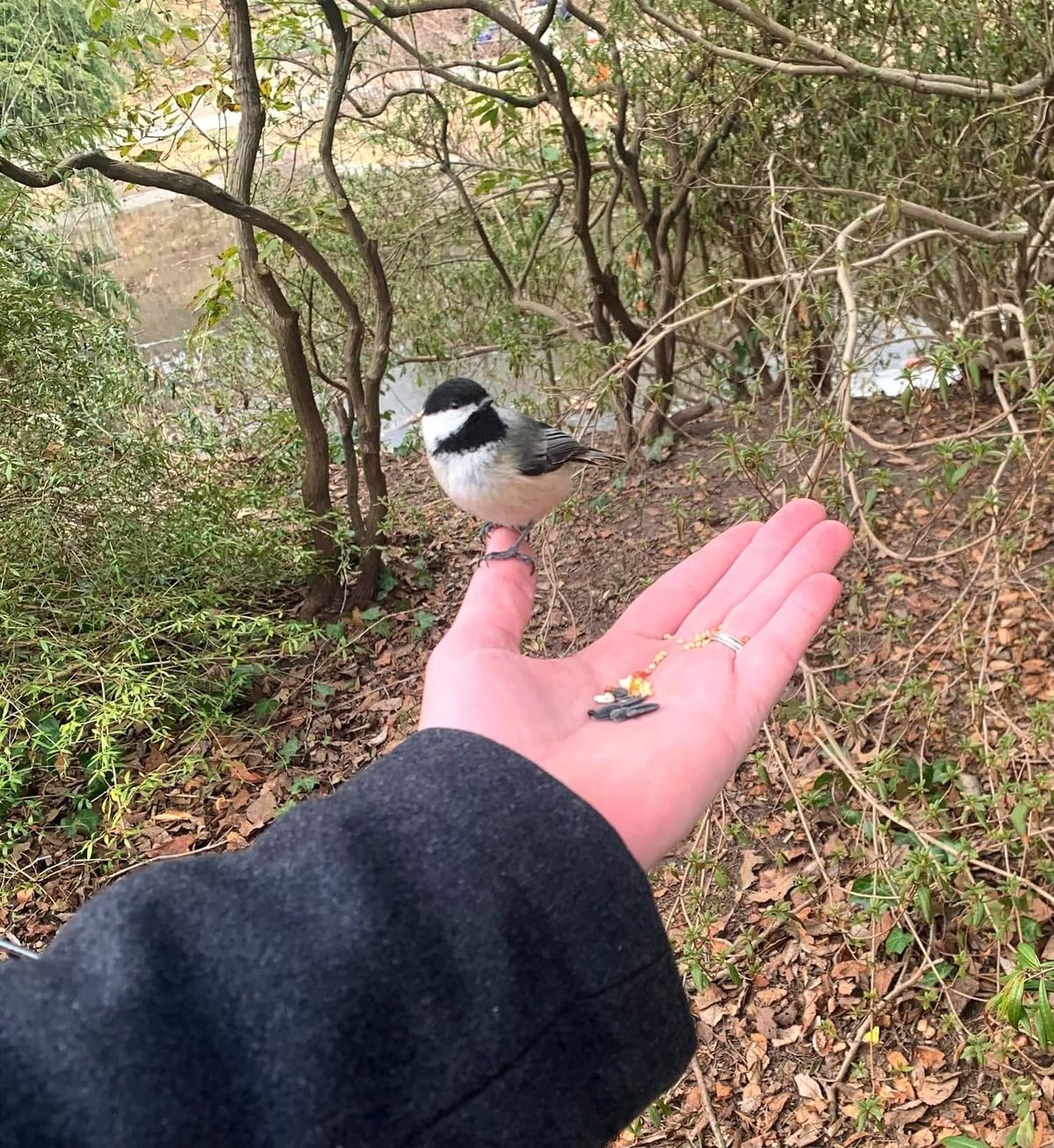
BOTD: black-capped chickadee
I am always thrilled to talk about birds. I relish when a friend in Houston sends me a picture he has taken of a yellow-crowned night heron and asks “the fuck is this thing” (which exact thing he has done twice), or a friend in Maryland asks me to help ID the woodpecker that’s been working on the tree out front for several days (yellow-bellied sapsucker: great bird, great name, great at making rows of neat little holes in tree branches).
My entry into birding was my mom. She was an avid birder. In the months when it was lovely to be outside in suburban Maryland, she kept an Eastern birds Peterson Guide on a porch wicker table beside a pair of binoculars and an ashtray.
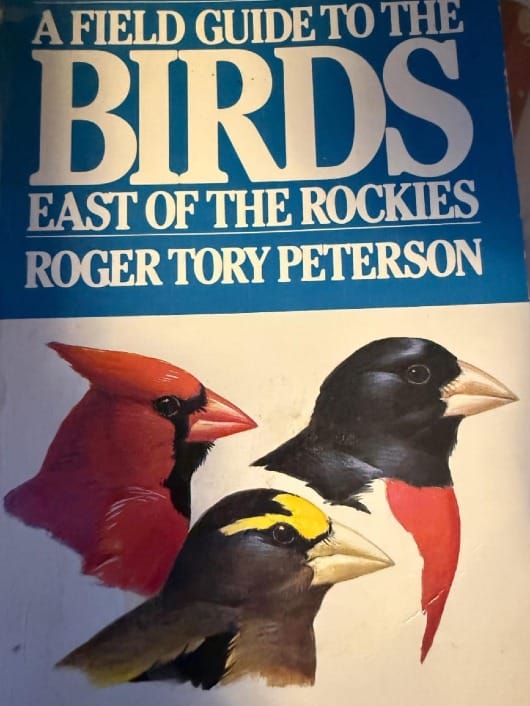
I then had an… idiosyncratic… fourth grade teacher who made my class learn every bird that spends an appreciable amount of time in Maryland – “backyard birds” you might call them. He would pause a math lesson to run outside and track a red-tailed hawk across the school ground. Frankly, this was way more impactful in the long term than 30 minutes spent memorizing multiplication tables, because I haven’t stopped chasing birds ever since.
This has been a long-winded way of establishing that I have been at this shit for a while. But no matter how long you’ve been at it, birding is a deeply enjoyable pursuit. First, it usually means being outside; as long as you like being outside, it really doesn’t get old. Secondly, seeing a bird you’ve never seen before (a “lifer”, to dorks like me) is pretty thrilling if you care even casually. Lastly, any close encounter with a bird will hit even the hard-hearted like a Peterbilt. Even watching a mallard eat kid-fed bread bits from 10 feet away is an eye-opening experience (“damn his bill looks like yellow enamel paint, but its not” and/or “whoa, her brilliant purple wing patch looks illuminated from within, but it’s not”).
I interrupt to stick with the format a little bit: The Bird of the Day is the black-capped chickadee.
Long before kids, my wife (a secondhand birder if ever there was one) and I lived within the vast swath of New York’s finest borough one could accurately call “stroller Brooklyn”. I would often steal away to do a bit of birding in the area of Brooklyn’s wonderful Prospect Park called, incredibly fancifully by the genius park architects Olmstead and Vaux, The Vale of Cashmere. It’s a famous birding hotspot; it hospitably features a small swamp and a bunch of flowering and fruiting trees. It’s tough to beat the flurry of migrating warblers, grosbeaks, orioles and tanagers you can see mid- to late-May in the Vale.
The Vale is a reliable birding destination no matter the season, but in the doldrums of winter, you’re going to see about 20 species, period. Black-capped chickadees are among that number. They are almost identical in appearance and behavior to the Carolina chickadees Sara Kate has mentioned in past posts. There is only a tiny overlap in their range, and Carolina chickadees seldom travel very far above the Mason-Dixon. Where they overlap, they can learn each other’s songs. Therefore, identifying one or the other is more or less about knowing where you are in the world.
The above picture was taken in mid-March 2021. With winter being famously tough on birds (even ones that have decided over millennia that it's better than a long trip to warmer climes), thoughtful birders sometimes put out seed mix on the columns that surround the swampy area of the Vale. Driven a bit batty by Covid isolation, I thought “why not be like one of those people on Instagram who get to feed birds out of their hands?” and grabbed a handful of seeds after sanitizing (remember when everyone carried Purell everywhere? lol good times). I waited motionlessly maybe three minutes while this chickadee assessed the situation and ultimately decided I was either (1) a statue that had just now stopped moving forever, (2) a harmless weirdo (correct), or (3) worth the risk to avoid being bullied away by a cardinal or house sparrow (also correct, in retrospect). It spent maybe eight seconds on my hand, jumping from palm to finger. It was lighter than you could imagine but very much there, and its clawed little feet didn’t hurt a bit when they clamped on my pinky or thumb. I generally don’t take pictures when I’m birding other than the occasional iPhone shot of an especially cooperative guy to share with bird-brained friends, but I’m glad I did here, if only so that I could share it with folks like Sara Kate five years later.
I hope you’ll join her and me out there this spring migration.